

Hasan Piker owns and wears a Mao suit, the same worn by Mao Zedong.
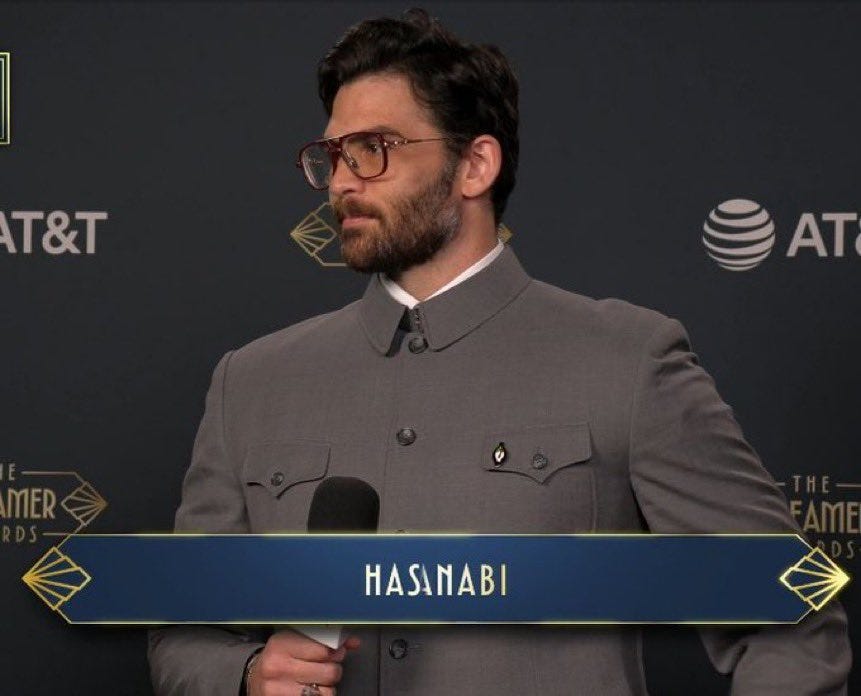
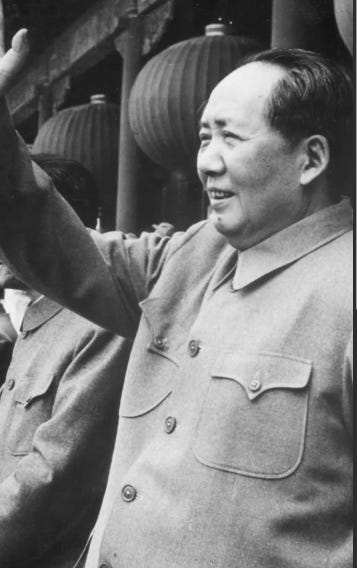
Or actually—it wasn’t a Mao suit, but rather a Sun Yat-sen suit, worn and pioneered by Sun Yat-sen.
Or wait—no, it actually is a Mao suit, because that is what everyone nowadays call it, especially after a century, and by the nature of how language works (the eponymous Mao suit being the most common denominator of a name).
Or—no. It doesn’t actually matter, does it? “Hasan Piker wears clothes”—yes, I am sure his detractors and fans are devastated but really, who cares? He’s a streamer, a nobody, a somebody, it doesn’t really matter, at the end of all things.
It doesn’t matter in the sense that most people who absorb this story will file it away as a minute irrelevance in their mind. Is this like the knowledge that the atom can be split? No, not even one-one-millionth of that. It matters to me in that I have deep personal passion for fashion, and likewise that I am of the opinion that the clothes we choose to wear are indeed political, and they can reveal much about our inherent and explicit natures. To the extent I want humanity to wear clothes at all, our future clothes should reject past paradigms, and be shed of the conservative lean of old clothing styles; our future must be bright, brilliant, glorious, and new.
To take an example, let us dissect the form as well as the function of the Mao suit, tracing its history back from its inception to the present.
The Mao Suit: Past and Present
In Qing China, strict sumptuary laws existed which enforced rigid authoritarian rules on appropriate dress and hair styles. Sun Yat-sen pioneered this style of military dress as part of his nationalist drive to Westernize China; to bring China up to military and economic par with the rest of the Western powers circa the early 1900s.
You can see the similarity plain on a comparable Western military uniform (in this case, American during WW1):
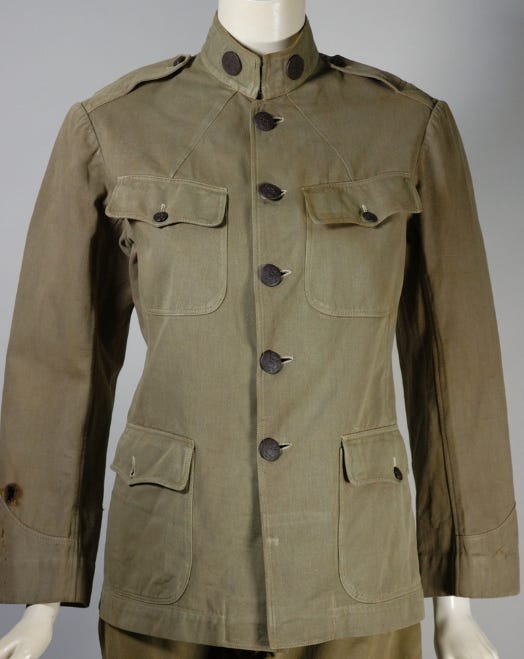
Effectively, Sun did what countless other people in China were doing—taking what worked in a Western European context and adapting it for Chinese usage in a Chinese context.
This is not, of course, to say that Europeans possessed some inherent superiority in dressing themselves or anything like that—but rather a reflection of the material reality that somehow, Western powers had been able to militarily overcome and keep defeating China for over at that point 60 years (from the first Opium Crisis to the Boxer Rebellions). China, both the state and the people, embraced changely slowly at first. They were quick and keen to adapt militarily, but when even the relatively modernized Chinese fleet got wrecked by the supposedly weaker Japanese one in 1895, that instilled a great panic across all classes, leading firstly to the Boxer Rebellion, and, more importantly for us, the casting out of everything, including styles of dress.
If you’ve been losing wars, for years, for decades, against supposedly inferior enemies, at a certain point, you will toss out all remaining cultural pride and get downright weird with the things.
This desperation, to try new things, even to the spheres of how you clothe yourself, coupled with an autocratic structure that abhorred any change, resulted in the Sun Yat-sen suit becoming the premier outfit of every Chinese person, not even military unit, following the tumult of the 1911 Revolution. It took several decades, and 1949, for the suit to truly become ubiquitous. By then, of course Mao and the Communists wore it, as did practically everyone else.
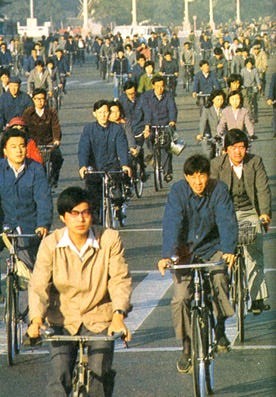
As the long decades marched on, the original impetus for the dress became lost to fading memories and unread ancient tomes, to the point that the suit ceased being Sun’s and became Zedong’s eponymous Mao Suit, the only people who wore it being passionate communists.
And then, after a decades, the trend stopped. The reasons are complex, yet quite simple. The Mao Suit was a symbol of national resistance against hostile foreign powers; those hostile foreign powers had been successfully defeated and driven out, and no longer posed a threat. China needed less a symbol of resistance and more those same foreign powers to come into China, with their foreign outside capital, and invest in Chinese industries. Thus, Mao led on and prioritized initial rapprochement with Western capital, first by pursuing a diplomatic relations with America under Nixon.
After Mao’s death, new Paramount Leader Deng Xiaoping of the Chinese Communists continued this process. Deng’s underling Hu Yaobang was made the face of the reform movement and delivered the Mao Suit its killing blow: Yaobang hung up the then just-Mao Suit, reserving it for ceremonial events only, and mostly adopted the Western style suit-and-tie. Millions of other Chinese Communists then followed suit (pardon the pun).
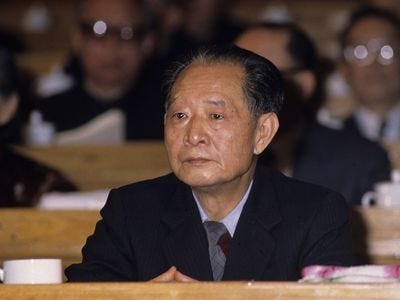
To both a domestic and international audience, the message couldn’t have been clearer: “we are no longer fire-throwing radicals; our aim is no longer a violent global revolution, as preached by us for decades in that classic Mao suit,” they seemed to say.
It wasn’t the only message China sent; they of course up-ended their entire legal and propaganda system to make Western investment and capital possible in a domestic context. And, it worked. China changed just enough to entice Western dollars and technical know-how, which they used to build the now the second or largest economy in the world, depending on which metric you value more.
Nowadays, President Xi wears a Mao Suit like Yaobang, only very rarely, in ceremonial occasions (e.g. state funerals), opting for the classic suit-and-tie most days of the year.
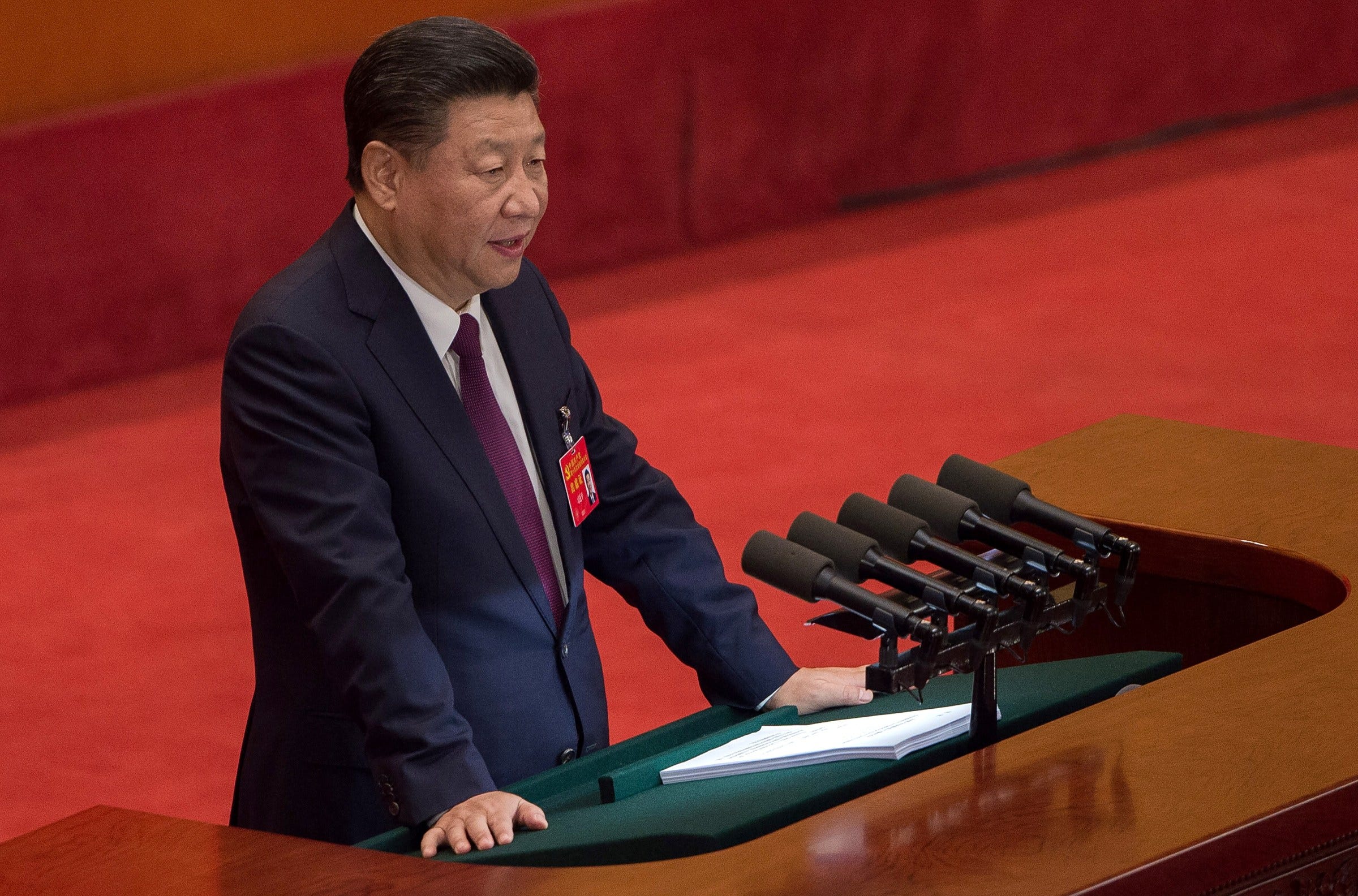
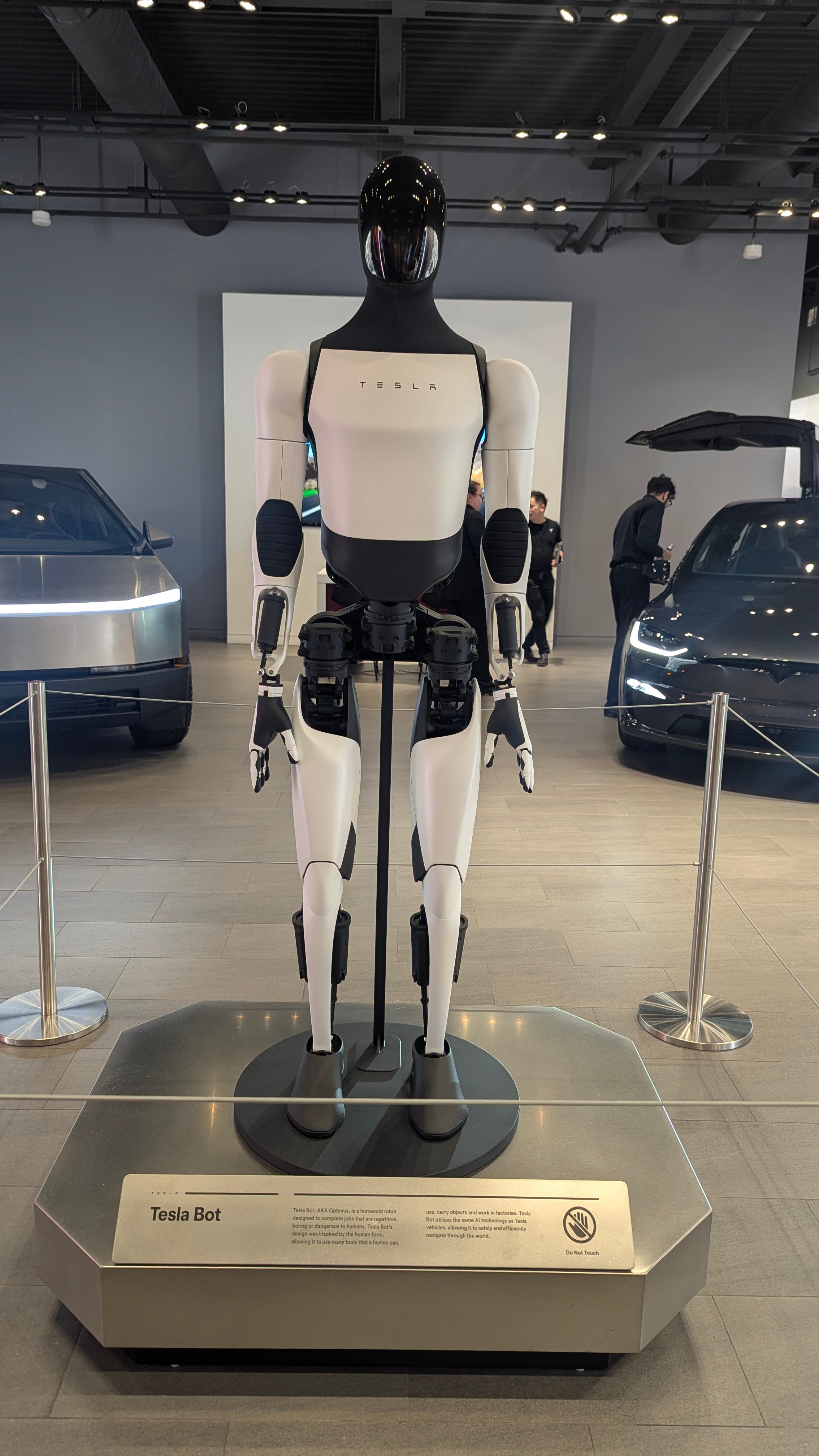
China today is an advanced, modern, hypercapitalist society. Their social safety net is minimal, work hours are long, and worker abuses rampant. Yet, it also has the markers of what any passive observer what consider ‘advanced’. Today, right now, you can walk down the street of many Chinese cities and see the roads filled with humanoid robots, as if we were actually living in Asimov's future. There are cop robots, delivery robots, traffic robots, and perhaps hundreds of more models being developed right now. And that’s just robots. On drones, on AI, on industrial output, on electrical output and capacity, and so much more, China is eating our lunch and forcing us to pay for it.
All of this is to say that if President Xi started carrying Mao’s Little Red Book everywhere, wearing a Mao suit, he’d quickly be removed by consensus by a China that desperately wants to hold onto its domestic material edge and impressive economic growth.
For perhaps the first time since at least the 1750s, China has finally reached a form of definite parity with the West, America and Europe alike. The Chinese political classes would not tolerate a revanche to Maoism, just as American political classes would not tolerate a revanche to 1600s Puritanicalism.
Hasan’s Mao Suit
Hasan wore the suit for several reasons, ranging from mundane (it was a nice, custom tailor-fit suit bought in Shanghai, and we all know if you don’t wear that fancy dress more often you’ll feel bad for spending money on it) to indeed political (the Mao suit represents a broad ideological spectrum of Leftism that Hasan supports).
To those who care enough to look at the picture, yes, it is plainly a Mao suit, primarily worn for those two aforementioned reasons. Of course, Mao Zedong is controversial, and it is lamely easy to go after Hasan for emulating someone many even in China have at least a complicated relationship towards (to say nothing of the oft-ugly Western view of Mao, of him being at least a tyrant, and often an outright bloodthirsty, stupid tyrant).
It would also be foolishly trivial to attack Hasan Piker, an American man of predominantly Turkic descent, for culturally appropriating what is decidedly neither Turkic or American. He even wore it in a culturally offensive way—the suit is meant to be worn at official or highly ceremonial events, and he took it to a College Democrats meeting, hardly a place demanding even a modicum of decorum! Yes, yes, he can be cancelled for this, he’s cancelled, Hasan Piker is over party, yes, yes, but what else?
Why He Did It; Or, Understanding the Left: The Madness Inchoate
To be knowledgeable of the world is to be rendered mad. This madness creeps, sets in, and transforms an otherwise conformist mind into one wine-dark with riotous thoughts.
Ape became man in the plains across Africa, and in that world, without language of actual speech or writing, all the terrors of the world were those we could behold with our own eyes and basely communicate with grunts and yells. But when we could speak, form words, we could thus pass down our histories, and eventually write them down.
It’s impossible to go an entire modern life without knowing about the horrors of modern life, without knowing about the Holocaust, the Indigenous genocide, slavery in the Americas, or the horrible history of your own country and background. Especially nowadays, when infinite knowledge is but a click, a thought, away.
And in spite of our often willful blindness, we aren’t totally blind. Our phones are made by enslaving children to work in mines. Those who live in big cities see daily the untold, downtrod misery of the unhoused. Our world is riven with torment and torture, with a mere veneer of cleanliness on its surface, meant to drive us all mad.
I myself have fallen prey to being a witness to the horrors. I’ve seen a child no older than five missing their lower torso. I’ve seen a father holding his toddler’s blown-open skull, tiny bone fragments and bits of brain dripping out. And more, and more, and more, and all of it from just one incident, the Gaza Genocide. There is more though, more in that and more in all the torments ongoing in the world today, day after day, every day, than I could witness in ten thousand lifetimes.
To be knowledgeable is to know all that, and more. Hasan Piker is a well-read individual, well-taught, to be sure. A double cum laude from Rutgers, living in a multimillion dollar house in West Hollywood, largely self-financed, would have to be.
It’s made worse by also being a leftist. Leftists especially love to immerse themselves in misery, not out of any sadist reason but out of an analytical, rationalist impulse. Marxism was born from Hegel, which itself sprung from the enlightenment and rationalist inquiry, which sought to dissect the material world into things that could be understood and measured. From the same paradigms came evolution and relativity; thus arose Marx, to understand capitalism. In Marx’s time, there was likewise plenty of misery abound. His comrade, Engels, wrote extensively on the working conditions of Englishmen, sometimes with conditions as terrible as one might encounter in a later 20th century concentration camp.
Whither this misery? After all, if they could understand its source, it could perhaps be cured. In this way, Marx was no different than other 19th century pioneers, seeking to upend centuries of dogma to render the world a better place. As Lister dissected and revealed the human biology, so too did Marx and Engels do so with human political economy.
Marx did indeed find something similar in economy as Lister found with bacteria: Capitalism; or, the exploitation of the vast majority working class by a minority owning class, was the source of much of the present ills in society. People suffered in poverty because it made a select few rich individuals richer and fewer in number. He went on to expound that Capitalism was but one stage of humanity’s economic development. Like Darwin, he found evolution at work, only a more social evolution: from tribalism, to Roman slave imperialism, to feudalism, to capitalism, then communism.
Anthropologists and peoples of non-European contexts have of course disproven the latter formulation; there was no Hesiodic precession of the Ages, from one to the other as Marx supposes. Some places never had feudalism, for instance, or Roman-style imperialism. And, the Soviets as well as every other Communist power in the 20th century, famously rebelled against the notion that one needed to go to Capitalism at all; they sought to skip it entirely1.
Yet, capitalism is a thing, a distinct notable pattern of existence different than ancient tribal communities or feudal living arrangements. And yes, definitionally, capitalism matches the Marxist definition: in that a select few people own certain types of property (e.g. stock), which in turn makes them richer and more well off than the vast majority of people, each of whom labor more and more directly with the goods that make the capital owner actually rich.
As for human misery, yes, things could always be better, even for those who have it best. In the American context, it’s why the Presidency has switched parties every 4 years since 2016. People are clearly dissatisfied, and it isn’t just Hasan Piker.
If the so-called century of American humiliation will have an accepted start point, it will clearly be September 11, 2001. The downing of the Twin Towers and further attacks led America to nearly three, perhaps four or even five decades of constant counterinsurgency warfare in the Middle East against intractable nationalist and religious resistance forces. The allure of American military dominance was further shattered this June 2026, when the United States capitulated in Versailles to a supposedly weaker Iran, despite the US possessing a modern fleet.
All the while, other countries are outstripping us economically and materially. We don’t have high speed rail (first built in the 1960s in Japan), we don’t have cheap accessible healthcare (like Europe built beginning post 1945), we don’t have cheap abundant electric cars (like China right now), and we most assuredly do not have anything resembling an Asimovian revolution in robotics (also China). Our robots are all actually just puppeteers, using VR tech to move robotic limbs around.
To a knowledgeable observer, this indeed sounds familiar to Qing China’s own predicament post-1895, when Sun and others started wearing Western clothes.
America in recent memory has been wracked by decades of madness and stupidity. Not only are we losing war after war, not only are we materially and economically moribund, but now we have Donald Trump as the most disastrous, most corrupt President the country has ever been cursed with. His removal is a must across every metric: Constitutional, legal, moral, geopolitical; his continuance a stain upon America’s shreds of virtue; he is in every way a shadow of the vile Qing Empress Dowager, Cixi.
Given Trump’s attire is typically a suit-and-tie, what better way to rebel against this tyrant then by shedding that suit-and-tie and putting on a Mao suit? That may ultimately be the reason why Hasan put on his Mao suit, and why he continues to wear it somewhat occasionally. Of course, Hasan has also taken to wearing a classic suit-and-tie himself, so it may just be a case of having cake and wanting to eat it, too.
At the end of the day, of course, none of this matters: from the reason Hasan wore the Mao suit to the reason he doesn’t wear it constantly, who cares. And yet, I do, and so do you, if you’ve read this far.
This Matters Because I Care A Lot
What you wear says a lot about you and your society. Each reflects the other and thereby reveals its truth. When the future peoples dig up our corpses, the clothes they find clung to our dried forms will fill their libraries. And personally as well as frankly: we are all too nakedly conservative in our dress forms. I believe firmly in the new, in the exciting, in the fast and dramatic. There is a boldness to be had, to be represented, in how we ought to dress.
So, forget the Mao suit. Forget the suit and tie entirely. Burn it all down, and we will be better off for it.
Let’s start with the classic suits and ties: they are firstly male. In a world where half the working population is female, this clearly cannot be the standard. Yes, female alternatives do exist, but they are all trying to harken to male suit-and-tie patterns. A suit tailored for women is still a suit, after all.
What world do we want to live in? I say, not the world of the 19th Century, where these fashions first became popular with mass mechanization of clothing and tailoring. Suits and ties are worn because they are easy to mass produce, and they have become the business standard for this exact reason.
Nor do I want to live in the 1900s in Qing China. While the feeling of American decay, even collapse, is palpable, we are not headed to a renewed Civil War2. We are in a blip of decay, perhaps, but a better, renewed future is possible within our lifetimes. Not necessarily an apotheosis of Man, but at least a betterment of conditions. As such, the Sun-Mao suit is inappropriate, even as Leftist symbology.
No one alive should want to return to the old world. Forget the Roman togas, burn the Mao suits, shred the suits and ties. The brave new world of tomorrow will be populated by brave new peoples, whose clothes on their back will born from our naked imagination.
Our future will be better, will be different, will even be alien, to our misinformed eyes. Consider then the fictional worlds we create, the wonders we build in our imaginations: that must be our future, of possibility brushing up against impossibility.
I especially have been touched by the creations found in movies and television shows recently, and that is where I will conclude.
If I could command us all to dress3, like some video game Overgod, here are some styles of clothing I would love to see more of, across the American spectrum:
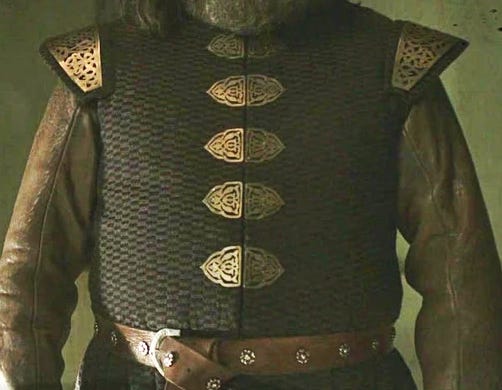
For the Men: Doublets, Longcoats, and Leather (so much leather)
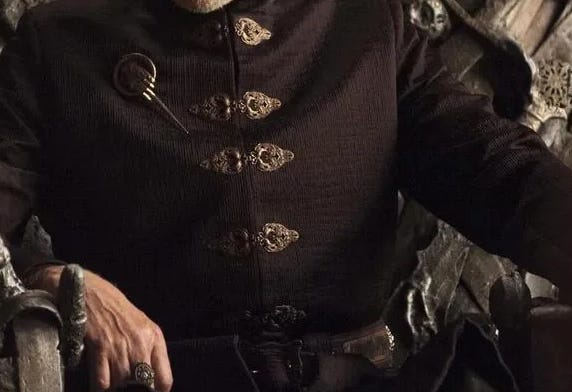
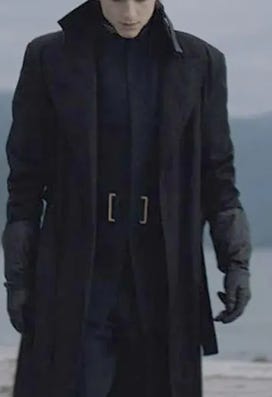
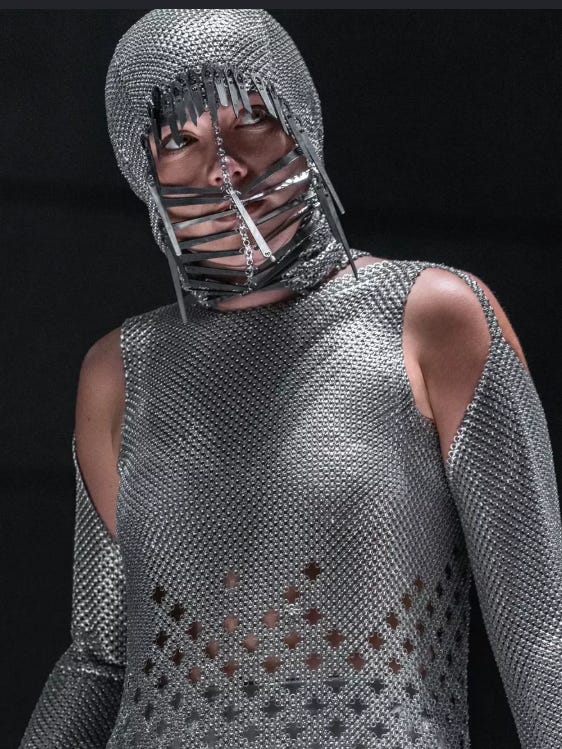
For the Ladies: Dresses and Metal Chains and Sharp Instruments


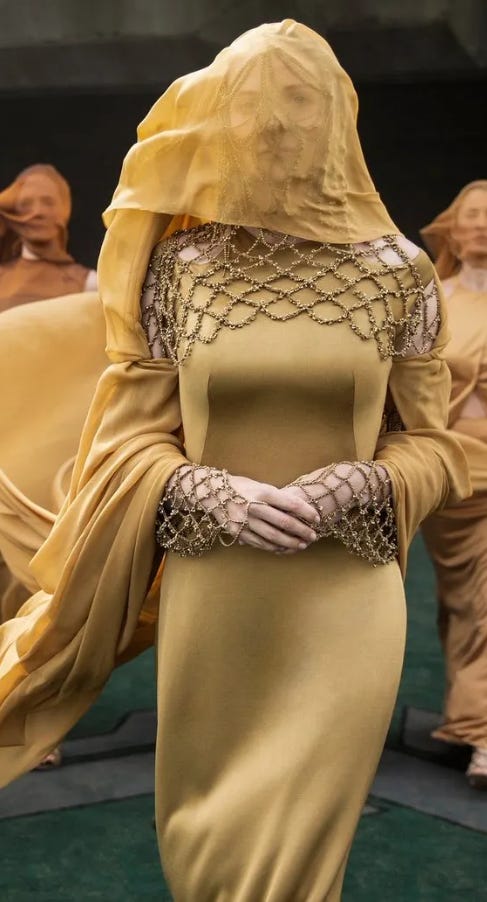
Unisex: Long, Elegant Robing
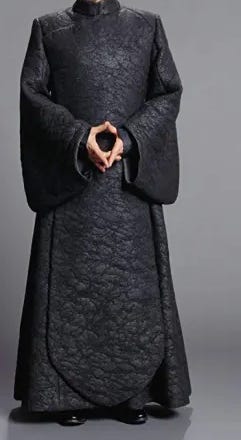
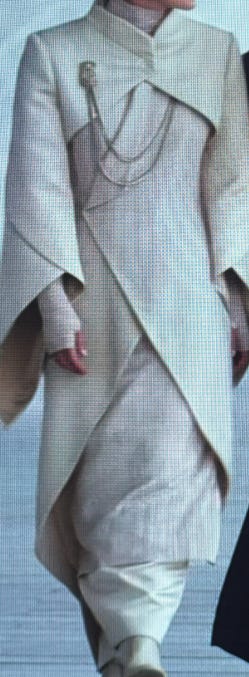
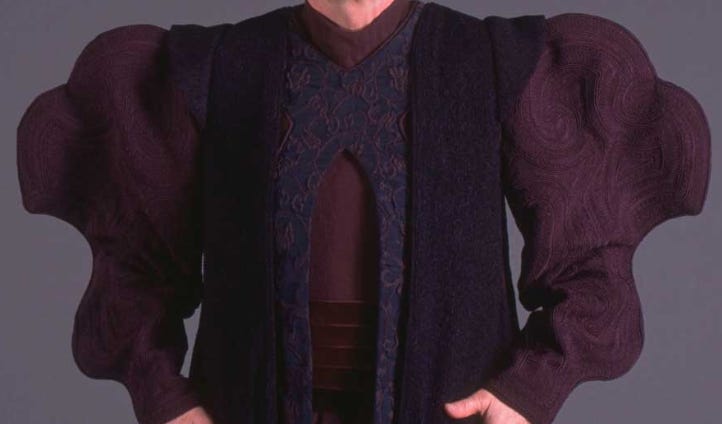
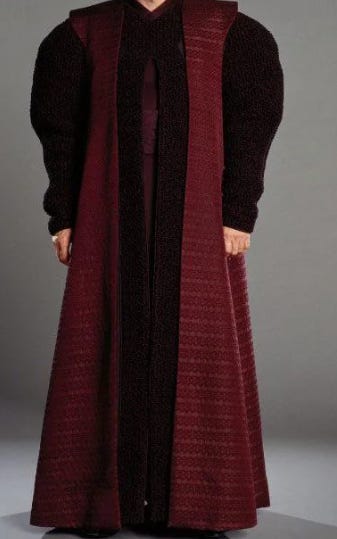
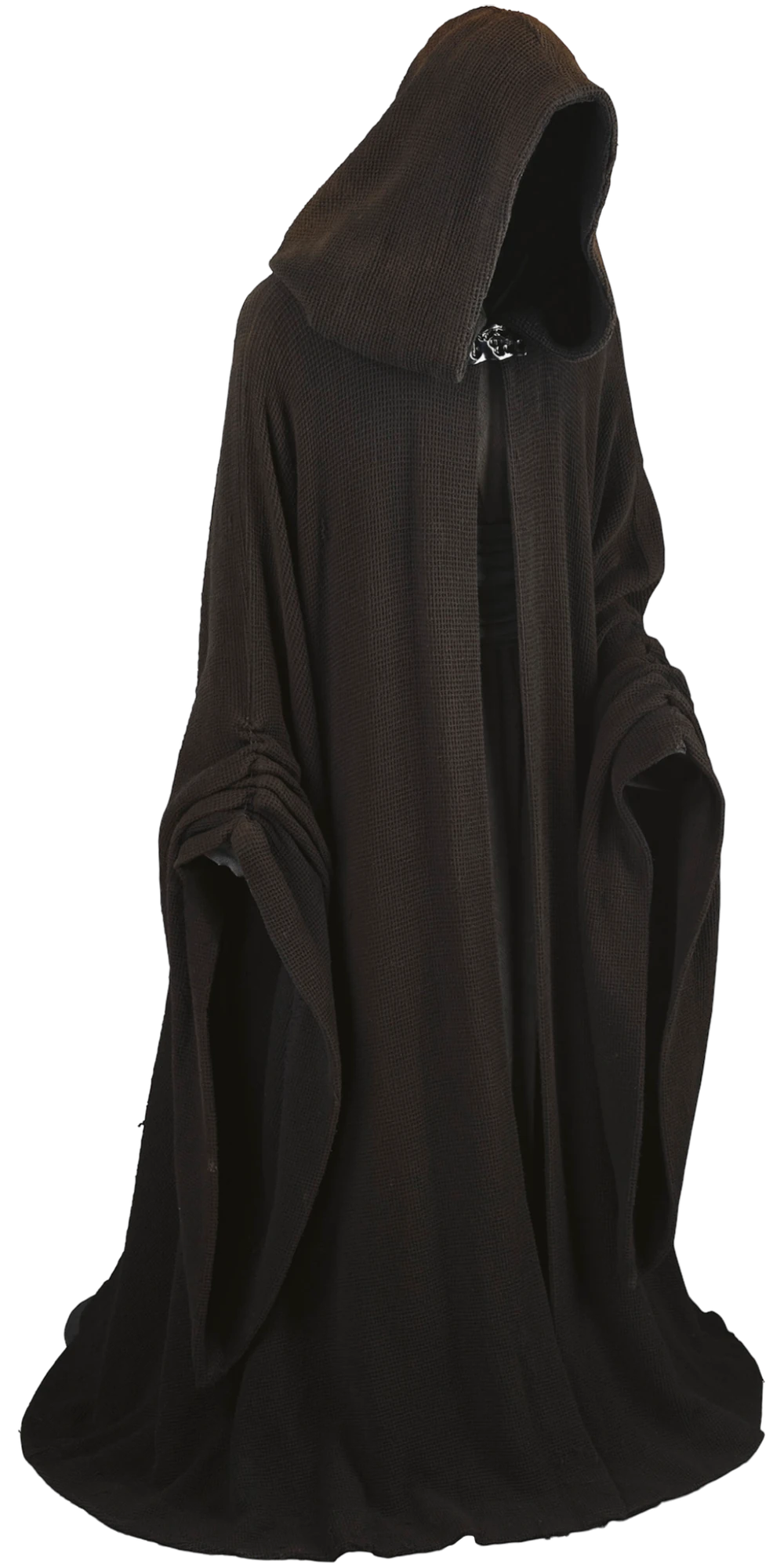
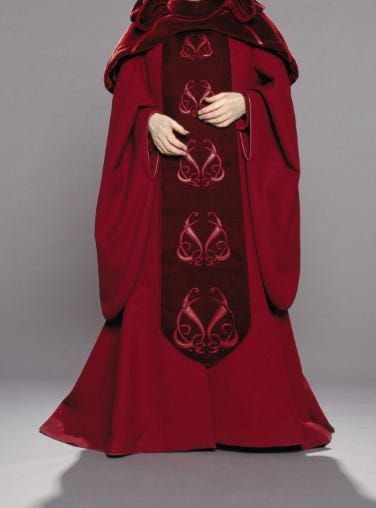
You can, of course, adapt and change these however you wish, including color and pattern as well as fit. These are just some of my personal favorite designs in recent fiction.
Just please, don’t accept the mediocrity of suits, or the inanity of Mao, when so much possibility exists across a spectrum of culture.
Cry ‘Fabulous’!, and let slip these hautes of couture!
China from Deng to Xi have also, from a Marxist perspective, disproven this thesis, that Capitalism is some skippable thing. Every time it has been tried, it has failed and resulted in Capitalism once more. My personal take is that if you say “we are in late stage capitalism”, please also give me the upcoming winning lottery numbers, because you clearly have the ability to predict the future, because otherwise, how would you know capitalism is near its end stage? Sing to me, oh Communist muses, of an uncomplicated time!
If we are, feel free to tell me in the trenches and bunkers of the future ‘ha-ha, you were wrong’ before we both get vaporized by a drone.
Moreso: I would command the fashion industry, to render this preferred reality of mine physical and real. I want to see people dressed up like this at the grocery store, at parks! I want to be as normal and natural as short shorts! Let us live in the future we so desperately both desire and deserve.
I would argue that you’ve thought more deeply about this than Hasan has. And it’s a beautifully thoughtful exploration. Hasan is a provocateur. In my estimation he wears that to stoke the ire of his opponents, which feeds the defensiveness and ideological commitment of his supporters. He is, in a sense, trolling. It is a dress that allows him to espouse his ideology while making a mockery of the hypocritical right, who decry anything to do with China and communism while creating a kleptocracy and maintaining a socialism of the rich and corporate as they simultaneously maintain a capitalist system built on the exploitation of their own people and the world at large.
Also sign me up for genderless robes any day of the week.
Great article, the one thing we can be sure of about the future is that it will be weird beyond our wildest dreams.