

Imagine. A bright, sunny day, warm and welcoming. Out steps the candidate onto the stage, crowds assembled and clapping for their man or woman of the hour. It’s rapturous applause o’clock, but the media, in the back, is rolling their eyes. What is the candidate going to say this time? Only the same thing every other candidate is saying: e.g. ‘I promise to increase Pell Grants to every minority-owned small business owner who has operated for at least 3 years in a majority-minority neighborhood’. But then, out of nowhere, the candidate utters these words, and the world stands still:
“I’m going to be the first President on the Moon.”
Instant condemnations of INSANITY follow, as decried by false heralds in the mainstream media and corrupt party bosses.
LOLZ, the naysayers, the cretins on the internet will titter about.
But from the masses? More than loyalty, more than conviction: their love will have been won over with this single, specific promise.
Let’s break it down.
Hundreds, maybe thousands, of Democrats are going to run for President in 2028. Only one of them will actually become the Democratic nominee for President. Who will it be? Only a few dozen will ever make it to any debate stage, and only a handful will actually be seriously considered by voters. They will all try desperately to stand apart from each other, on debate stages and on the campaign trail. There will be Medicares For All, Medicares For Some, and Not-Technically-Medicares-For-All-Or-Many, and that’s just some of the healthcare policy choice out there. There will be so many other formulations of other policies that Democratic primary voters will have effectively limitless choices for their candidate, and many candidates will struggle to break above the morass.
So, who will it be? It will not be anyone shocking. The nominee will be someone already well-established in American politics; every successful nominee in living memory was a well-known entity before they ran, before they won. Yes, the nominee already walks amongst us.
Moreover, the person who does win the primary will possess certain attributes that will mark them as superior to their opponents. Consider the weaknesses that Biden and Harris possessed, weaknesses that voters will keep first and foremost in mind as they fill out their donation checks, as they fill out their ballots, for 2028. The weaknesses will be the inverse of the strengths, so here are the strengths voters are going to be keeping an eye out for:
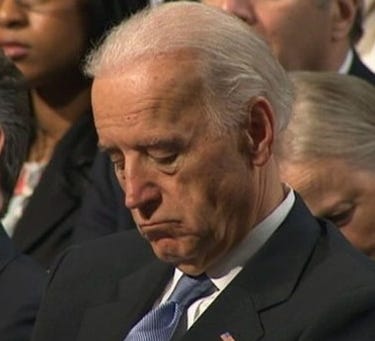
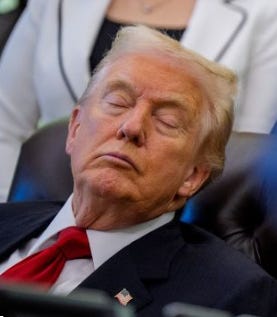
A younger, healthier candidate; meaning, can the candidate not only hold the office of President for 8 years (without dying or being forced out of office) but also hold it vigorously and energetically?
A dreamer, a builder, an innovator: the winning candidate will be bringing new solutions, new challenges to the table. In other words, if the candidate sounds like Hillary Clinton’s 2016 run, or John Kerry’s 2004 run, or worse, Clinton’s 1992 run, why? Many of those older voters from those old coalitions are outright dead; the candidate must be appealing to actual, living olders. This doesn’t mean tacking left or right per se—it just means tacking new. Come up with new ideas, new formulations, and the people will listen to you.
Boundless self-belief, yet avoidant of malignant narcissism.
The Great Promise: more than anything, their entire mantra, from the way they dress to the way they speak to their policies, must revolve around “better things are possible”; “you will be better off after my Presidency than you are now”.
Winning the electability argument: who will win the electability sweepstakes? Plainly put, it will be the person who can win a majority of the Democratic delegates on the first ballot at the convention. A large part of why Kamala Harris lost in 2024 is that Biden’s 2020 electorate stayed home and did not vote for her. A candidate that can unify the party and thus turn them out will be more likely to win than one who focuses on the two Liz Cheney Democrats remaining in America.
There is going to be only one winner in 2028. Only one candidate is going to be able to tick all the right boxes with all the right voters, and command a majority strong enough to win on the first ballot at the convention. The primary election is already poised to be extremely grueling and difficult, with even the best candidates doomed by sudden gaffes.
In war as in politics, the best mantra is to choose a winning strategy and then execute on it, simple as. There are things commanders and politicians can do that lead them to failure and defeat, as there are things they can do that will lead to victory and success, and the best commanders and leaders must choose the winning strategy, if they hope to be successful. For military commanders, the most common winning strategy is to secure your lines of supply and then to attack with overwhelming force; for politicians, the most common winning strategy is to win over hearts and minds, and then also to attack your opponents with overwhelming force.
We are now at a unique moment in history, where a candidate for President can do both: win hearts and minds and crush their opponents underfoot with a moonshot promise. The uniqueness of this moment must be stressed. The Artemis IV and V programs are destined to return mankind to the Moon in 2027 and 2028 respectively; the first US missions on the Moon’s surface in fifty years will be happening just as the primary is taking shape, just as primary voters are going to the polls. This is definitionally a once-in-a-lifetime opportunity, for a candidate brave and willing enough to take the risk.
A trip to the Moon, it should be said first and foremost, is no joyride. Of the twelve Americans who have been on the Moon, ten were explicitly military, with only one civilian scientist ever making it to the Moon (Harrison Schmitt, Apollo 17; the other one was Neil Armstrong, who was a civilian at the time of the mission but was also a former Navy pilot). This is because outer space is one of the deadliest environments known to humanity, and being there for any period of time exposes a person to bone decay, sleep deprivation, radiation exposure, vision troubles, potential exposure to extraterrestrial diseases, and the risk that a sudden piece of minute space debris hits your space vessel, instantly killing everyone on board.
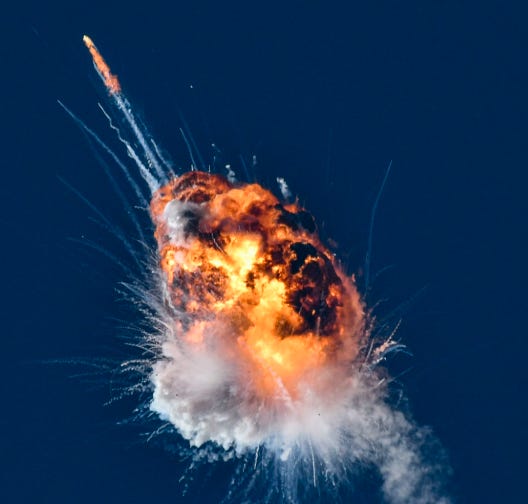
Oh, and the rocket can blow up before it ever leaves the atmosphere.
Despite that, there is, of course, an immediate and obvious need to having more civilians in space. Even if you don’t care about Elon Musk’s Mars’ ambitions and designs (I don’t), civilian space travel is still:
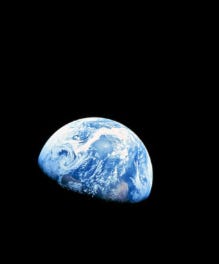
a) Very cool; if you deny this, consider seeing this for yourself, with your own naked eyes, by just looking outside your viewport.
b) Incredibly dangerous and deadly. There’s a chance every astronaut we send up there does not return. Much remains to do to make it safely feasible at scale.
c) Yet all challenges are also eminently fixable and improvable, with mass scaling to a larger audience possible in the later 21st century, and mass civilian space travel (like air travel) possible in the 22nd century.
Making such a Presidential promise to be the first President on the Moon also kills several birds with a single shot, more than might first seem obvious. But to start with the obvious:
Only the healthiest and youngest candidates will be able to make this promise. While a trip to orbit is possible, even for the elderly (see: William Shatner, in his 90s, in suborbit), a trip back-and-forth to the Moon will only be able to accomplished by the youngest and healthiest. Not only must the President be able to land on the Moon, but also walk on it, and assist with the Moon mission itself. This automatically disqualifies anyone above the age of 60, as well as anyone who is not already physically fit.
The candidate’s courage will be unassailable, their bravery and conviction, unchallenged. They are making this immense sacrifice for humanity and for America, knowing very well they might not make it back.
The point of the President going is multifold:
To prove the safety and efficacy of civilian space travel by sending the most powerful civilian to space.
To plant more than a flag on the Moon; to mark America’s progress to the rest of humanity, we will be the first country in the world to send our head of state and government to deliver the first Presidential address from the lunar surface.
With luck, we can even pivot away from Asia and the Middle East and instead fully to space, where we can hopefully find more room for agreement and collaboration with our would-be adversaries on planet Earth’s surface.
It will set up an expectation for reelection and the inevitable next presidential transition. With the Presidential Artemis mission scheduled to take place between Years 6 and 7 of the administration, the whole country will be geared towards this purpose; the people will not elect a different candidate in Year 4, who did not promise to go to the Moon and who has not been preparing for it during the previous years. Moreover, the mission will effectively and literally transition the sitting President into a lame duck, more so than the midterm, for while the President is in space, they surely cannot be Commander-in-Chief, allowing as well as forcing the sitting Vice President to assume the duties of the President, perhaps for up to three weeks in total. This will force the President to actually train the Vice President for the role of President (no more hated VPs a la Kamala Harris repeat scenarios!), as well as ensure that the Vice President gets experience as President themselves, absent of any possible Presidential oversight for almost a full month. By the time 2036 rolls around and it is time to pick a successor to the First President on the Moon, we will have an experienced Vice President, who literally served as President while the elected President was on the literal Moon, and has otherwise been training and preparing for it as hard as the President has been training for their Moon mission.
Why the President though? Because the President is the only one who can do it, both legally and morally. First, the President is Commander-in-Chief, and NASA follows orders from the C-I-C, always. If the President ordered NASA to send another Bojangles the Monkey up to space, they would have to comply, as they are under strict military discipline. So, the President is the only person in all of humanity who can order NASA to put a civilian in a future planned Artemis flight. Now, who will that human be?
There will be arguments made that the limited number seats available for the limited number of missions should be reserved for mission specialists; that if any civilians go to the Moon, they should explicitly be scientists, performing scientific experiments on the Moon’s surface. This is very defensible from a limited scientific perspective, yet it misses the point.
First, the Moon has been in our orbit for billions of years. It will likely be in our orbit for a billion more years. It’s not going anywhere, not the tiny rocks or the buried metals beneath; there will always be more time and space to send more missions to the Moon. But will that mission be American? Will that mission contain the first head of state to land on the Moon; will that first head of state be an American? That’s what is at stake here: to forgo our chance to make our mark on the stars, to establish a truly historical, monumental achievement for our entire species and nation on the lunar surface.
The Presidential nominee, whoever it is, will likely not be an Air Force-trained pilot. They likely will not have trained for a Moon mission at all, having not considered space travel since they were in kindergarten. They will be, in other words, normal; as in, not the superhuman trained athletes we require to be in our space program.
The question to answer then, and the reason why the President must go: can a normal person, possessing no special skills or talents for space travel, successfully go to the Moon and back? That is the reason why the President must go, and that is the reason why the President is the only person who can go. Who else could do it, who else could be picked? Whoever is chosen will have to accept a likely one-way trip, a suicide mission. Asking someone under military discipline to do so is easy; NASA is not short of volunteers. But if the only people who go to space are those under military discipline, then humanity will never actually have civilian space travel—at least, America won’t. And choosing, much less asking, a civilian to go on a suicide mission is something that simply isn’t done from a moral perspective, not even voluntarily; the President is the only person with the power and will to volunteer themselves.
The President can prove, in other words, by their actions and deeds, that civilian space travel is not only safe and effective, but indeed, humanity’s future. When they descend from the lunar capsule and declare “that’s another great leap for mankind”, it will mark one of the greatest achievements in human history; everyone living will say, “if the US President can land on the Moon, maybe, one day, my great-grandchildren will be able to.”
And if the President should die on the mission, either in space, on the rocket pad, on the Moon, or elsewhen: they will be immortalized as perhaps the greatest President in American history. Not that death is the aim, but that death (inevitable for all humanity) could be a boon if it comes.
Obviously, there are risks. The President may get sick and be unable to actually do the mission, or die before it takes off. The President may decide, after getting elected, to get completely fat and out of shape, ruining the viability and potential of the trip. Cost overruns and delays are inevitable, and figuring out the actual chain of command on the mission will be difficult (for obvious reasons, the President will need to take orders from people they are nominally in charge of, from NASA operators on the ground to the actual astronauts in the lunar capsule and rocketship). And, it’s going to be time-consuming and tiring for the President to spend every waking moment of free time they can scrounge training and preparing their body for the inevitable (but again, that’s the beauty: civilian space travel, if it ever happens, is going to first happen for people who have jobs and can train their bodies for the journey; the President is the perfect avatar for this). But the risks are outweighed by the promise of infinite benefits.
Let’s return to the electoral calculus. The winning Presidential Democratic nominee in 2028 will be someone who is:
Young and healthy
Promises to build a better America
Has boundless self-belief absent malignant narcissism
Has a plan for the inevitable succession after they leave office
Capable of uniting the Democratic Party
By saying “I will be the First President on the Moon”, the 2028 nominee checks every single box. Young and healthy? Only a suicidal person would say they want to go to the Moon if they were anything but. Bettering America, boundless self-belief, and a plan for succession? Check, check, check. And, using the Moonshot idea as a template, the candidate will be able to cut across ideological divides and deliver ideas that transcend our understanding of left and right.
It is, in effect, the winning strategy for any candidate in 2028. If only there was a single person with the conviction, strength, courage, and passion capable of doing so…
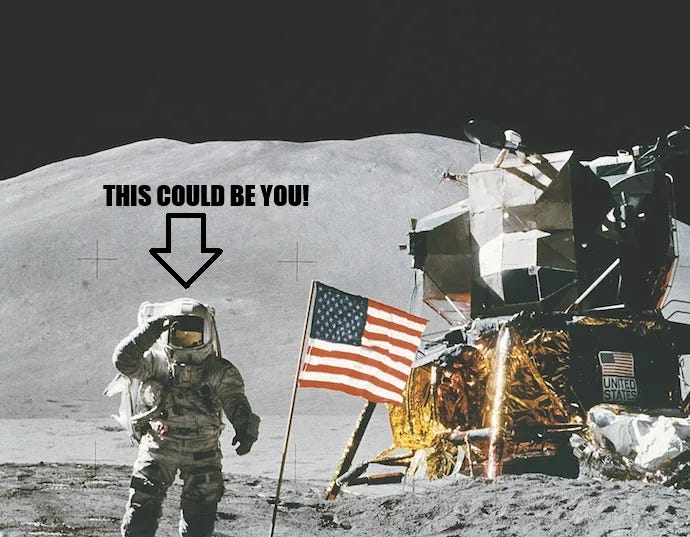
The Mark Kelley shaped elephant in the room: