

This past week, María Corina Machado of Venezuela was awarded the Nobel Peace Prize “for her tireless work promoting democratic rights for the people of Venezuela and for her struggle to achieve a just and peaceful transition from dictatorship to democracy.” This came after much consternation and debate over whether or not Trump would be awarded the much-coveted (by him) Prize, over diplomatic achievements such as supposedly securing a peace between India and Pakistan. Rather than award the American President directly however, the Nobel Committee, which chooses winners, chose to award America’s imperial interests instead.
Machado’s merits are, to be sure, not completely unfounded. She has, at personal risk, taken a stance against Venezuela’s leader, Maduro. It’s definitely not the cowardly thing to do in a state such as Venezuela, which has suffered much due to the US-led economic siege and Maduro’s mishandling of the siege’s effects. Yet one would be hard-pressed to consider her as either a promoter or enabler of some sort of peace process for Venezuela or the world stage. Quite the opposite: she is one the vocal advocates for not only Maduro’s violent expulsion from power, but for Israel’s genocide in Gaza and the West Bank. If she had her way with Venezuela, there would either be a coup or a civil war against Maduro, both of which are counter to the mission of peace, through which she would directly benefit, likely being named to lead a transitional government. Of course, she presents herself as a non-violent advocate of regime change, but regime change is very rarely non-violent, and never has it been achieved peacefully by someone so vindictive as Machado. A Mandela she is not.
It’s not hard to think of other, better, more deserving of the prize of peace, than Machado, in other words. Many who deserve it are the unsung heroes of diplomacy, those staffers across foreign ministries and state departments who do the real gritty work of making peace happen and stick beyond temporary ceasefires. Few, if any, will ever receive a reward commensurate with their effort. Beyond them, there are countless activists and government officials with far more going for them than Machado. It’s cliche at this point, but Greta Thunberg’s tireless advocacy for Palestine, to say nothing of her work against climate change, should mark her as an obvious Laureate, yet it’s likely she was never seriously considered.
Of course, it’s obvious why Thunberg or anyone like her has yet to be named a Laureate. Who awards the prize and why they award the prize determines much of what the prize actually means. The Prize itself is paltry. For furthering world peace, Laureates are awarded the equivalent of a one million dollar (pre-tax) prize and a fancy diploma complete with an equally fancy gold medallion. That’s about enough money to purchase, in cash, a one bedroom one bathroom house in the outskirts of Oakland; if this prize truly meant that one furthered world peace, one would think it would merit more rewards.
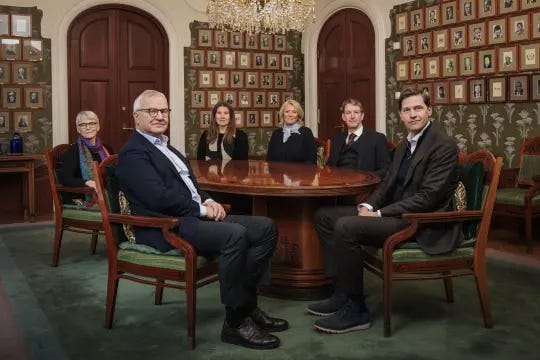
And indeed, it’s hard to argue that the people choosing who gets the Prize have a truly global, neutral, unbiased understanding necessary to deliver such a seemingly important badge of recognition. First, the Nobel Peace Prize is not some international body created by the UN; it’s not even international at all. Instead, all five members of the Nobel Committee are appointed by the Norwegian Parliament. This could be forgiven somewhat if Norway’s Parliament did appoint an international membership to the Committee but lo and behold: most Committee members are themselves former, partisan members of their Parliament, with some even being former Prime Ministers.
As for Norway itself, it should come as no surprise that Norway is far from a neutral, non-aligned power in world affairs. The country is one of the founding members of NATO, after all, and is well-inside the American sphere if not influence than outright control. Its strategic position along the North Sea make it part of a vital security early detection net meant to track Russian nuclear submarines as they make their way out to open sea. With the Arctic ice caps melting this century, this will open the Arctic theater up to higher intensity naval activity than had been possible in preceding centuries. Norway is therefore preeminent in counter-Russian US war planning, and America expends plenty of influence and dollars ensuring continued Norwegian support for American interests. To wit: Norway has committed to meeting a 5% expenditure of GDP on defense spending by 2030, as demanded by President Trump.
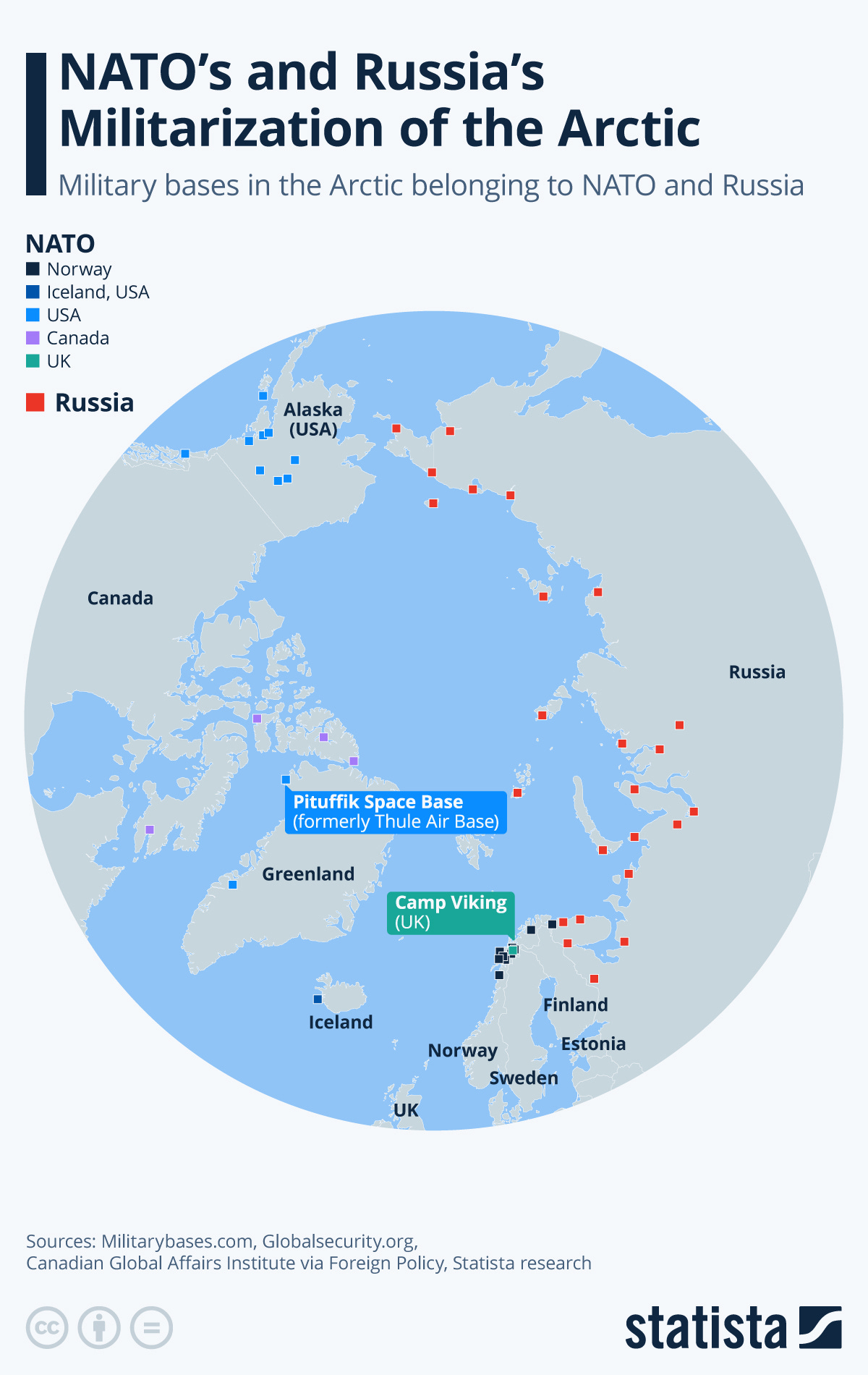
This doesn’t even mean that the US needs to puppet Norway’s Parliament and direct their Nobel Committee to name people friendly to US interests; Norway is quite capable and often eager to do so of their own accord. After all, the only politicians who succeed in Norwegian politics are those who are pro-NATO, pro-US interests. Those who are not are very quickly sidelined into irrelevant, unpopular parties. This is an oft-repeated pattern across non-Russian sphered Europe. In other words, to even be elected as a member of Norwegian Parliament, much less be nominated to the Nobel Committee, requires a certain type of pro-American, pro-NATO politician.
