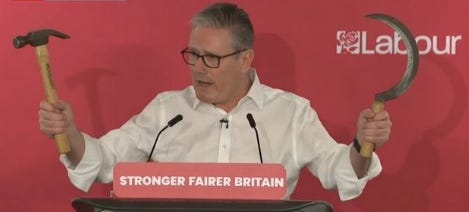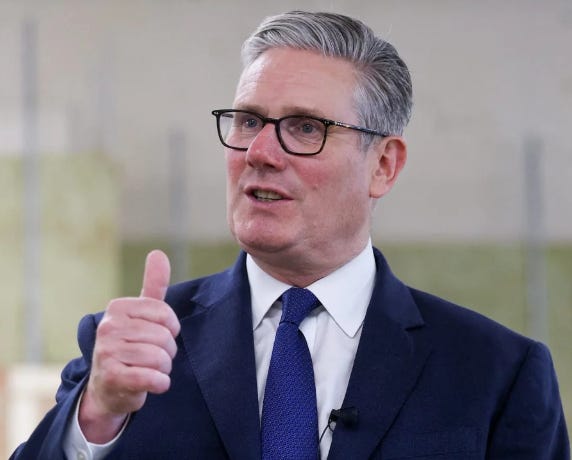
A spectre is haunting British Labour politics—the spectre of late-blooming irony-poisoned posters who have found in Keir Starmer their new lodestar. Since the implosion of the UK Labour Party last week following the disastrous local council elections and the subsequent rout of Starmer’s key backers in Parliament including Wes Streeting and others, the seemingly obvious death knell of Keir Starmer’s political career has been rung, with Starmer’s only supporters now being his former opponents amongst the Left.
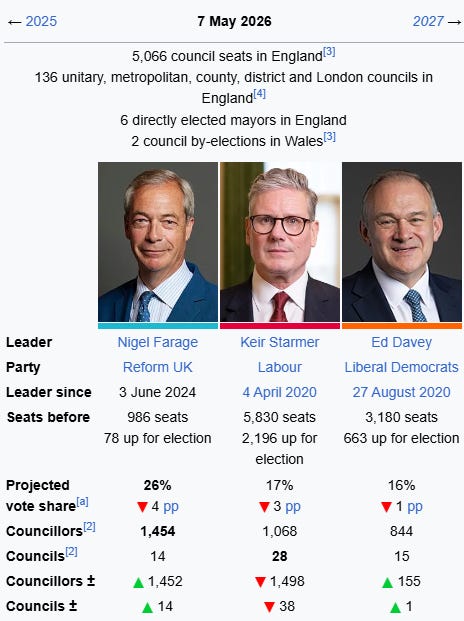
Yet irony alone is not enough to sway hearts. To be sure, we love an underdog down on his luck making a Mishima-style last stand in defiance of both universe and everyone. Starmer will always have that going for him, make no mistake. Yet there is actual cold, calculating logic behind supporting Starmer, even at this late hour. Suffice it to say that his competitors all have been judged on the scale, and found wanting. Let’s start with a look at the situation Britain finds itself in. The voters are right, after all, that there is something rotten in the United Kingdom of Great Britain, yet, as we shall see, all rotten things in Great Britain exist not because of Keir Starmer but in spite of his attempts to clamp down on them.
The obvious must be stated first. There are things beyond the control of any singular Prime Minister: the weight of human and geological history bearing down on all present and future generations. No modern Prime Minister can reverse the 10,000-year-ago sinking of Doggerland, or the subsequent loss of the Empire following WW2. Likewise, we live in a world post-Brexit. Britain today is just simply poorer and less well off than if it had not left the EU. Britain tomorrow will always be poorer than the imaginary Britain that did not leave the EU.
The Tories sold a false bill of goods to the British public with regards to Brexit, and they have already been punished for their lies. The myth of Global Britain, of a renewed British Empire built on grit and toil always lacked the material basis to make it a reality. The fact is, there is very little a modern Britain can sell on the global markets that competitors in America, in Europe, and Asia, cannot sell better and at cheaper prices.
But Brexit is in our past. No amount of accepting its failure today will undo the damage of yesterday. All we can do is try and be better, and seek to rebuild trade relations ruined by the disastrous process of Brexit. Yet just as the material consequences of Brexit are rippling through the economy, so too do we find ourselves the inheritors of problems beyond our control. The pandemic supply shock, America’s attack on Iran, Russia’s invasion of Ukraine: all of this crashed upon British shores like economic tsunami waves, tearing down fragile foundations in the midst of rebuilding each time.
No British Prime Minister, from the Pitts to Churchill to Starmer, would’ve been able to contend with all these calamities and come out on top, politically. This isn’t even a British phenomenon. Going back to ancient times, in China, in Iran, in Mesoamerica, and beyond, there has akways been the concept of a ‘Mandate of Heaven’, one where the sovereign is given divine approval to rule the people of the world. The approval and subsequent disapproval from the Heavens was plain to see: when the Heavens approved, bounteous harvests and won wars followed. When the Heavens revolted and the Mandate of Heaven appeared lost: coups, lost wars, famines, disease, earthquakes, floods, and fires all became rapidly manifest. The logic appears sound: if the world is good, it is because your rulers are good and should be worshipped. If the world is bad, it is because your rulers are evil and must be overthrown.
Yet these ancient logics should fail to modern eyes and ears for we now know, having been the very heavens ourselves in aeroplanes and rockets, that there is no great supreme power sending down pestilence and floods on nations ruled poorly. There is no power at all, save an almighty yet altogether human awe toward a natural world, ruled not by superstition but by causal reason and logic.
It is not Keir Starmer’s fault that the British people were afflicted by Covid, nor is it his fault that Donald Trump attacked Iran, or that Putin attacked Ukraine. To the extent he had any desires in those matters, it was “please god, please don’t, oh god, oh no, please don’t.” It’s also the exact same reaction any of Keir Starmer’s would-be replacements would have to each of those circumstances!
What, then, is Keir Starmer to be responsible for? Surely every governing and appointing decision he made since becoming Prime Minister. In this, there are three inherent critiques of Starmer’s premiership, each doomed to a lose/lose dynamic:
Governing as a fiscal conservative
The appointment of Peter Mandelson
His dull personality and speaking tone
For the first, this is where many in the Left spend their time hating Starmer’s governing decisions. But really, there is no real decision to be made here: years of Tory mismanagement, coupled with the exogenic shocks hitting the British economy, made Starmer’s job next-to-impossible. In simple economic terms, what Britain needed and still needs is continued, long-term investment, the type of long-term capital expenditures that take years to accomplish (such as building new factories). This work isn’t glamorous and isn’t expected to be immediately popular. To kill one of the great myths of the modern era: building a highway isn’t sexy; it is years upon years of delays, cost overruns, slowed traffic due to construction, and the resultant anger of an impatient public that invariably follows. Concurrently, the British standard of living has fallen off a cliff recently, and raising benefits, while immediately popular, will do nothing to build the economy of tomorrow. While Britain could, in theory, make these investments and also raise benefits massively, there is not enough tax revenue to do that without embarking upon a Sovietization of the British political economy. By nationalizing private producers, the British state could (again, in theory) use those profits to not only shore up the NHS but fix it for good. Yet such a nationalization process demands Autarky from global capital flows, and unless millions of British people are willing to either starve or become farmers again, it’s not going to happen, and even if it was: the demand of that political economy would require a political party and army to see it through, neither of which exist at the present. So the only actual choices are between investing in the renewed national economy and not doing so. In the latter, we could shore up, say, the NHS for a few years but then what? The money will run out, and we will be without a restored economic base to fund even keeping the lights on at the NHS.
The second critique, his appointment of Mandelson, has two excuses attached it. The first is the multi-dimensional chess read, where Starmer knew perfectly well who Mandelson was yet appointed him anyways to get a good trade deal with the United States. After all, Mandelson and Trump both shared a friend in Jeffrey Epstein. It ‘takes a diddler to know a diddler’, as they say. In this reading, Starmer’s appointment of Mandelson was too clever for his own good, thinking he could appoint someone so obviously morally corrupt for the national interest without it coming back to bite him in the ass. There is another reading: the naive Starmer, trusting his lying advisors, appointed Mandelson to the job because he simply did not know who Mandelson was or what he was accused of doing. This raises an obvious stink however: if Starmer could be duped into backing Mandelson, what else could he be duped about?
In a sense, both explanations are probably true and both are a little false. It’s very likely Starmer knew the type of person Mandelson was but did not know all the gruesome, gory details. It’s also been practically confirmed he did indeed want Mandelson as his Trump-whisperer in the White House. Yet the real truth is that he was in an impossible, unwinnable situation. Fail to appoint Mandelson and you risk not getting a necessary trade deal with the US. Appoint Mandelson and potentially face all the subsequent consequences. It was never win/win for Starmer, it was always lose/lose.
And thus it is with the third critique. Keir Starmer’s personality defects are well known to any person with a pulse in the UK and beyond. He’s been in public life for near-on two decades. Both the Labour and British voting public have had decades to render judgment on Starmer, moreover, you cannot judge a system merely on its outputs, nor can you judge an output by itself: Starmer would not be Prime Minister if the system did not make him Prime Minister; his existence as Prime Minister should rebut any arguments against his personality.
Could he speak better, communicate more passionately? Of course. But he is exactly who the British chose, and moreover, it's not as though he can choose who he is. It’s the exact same lose/lose dynamic that dogs Starmer across every line of criticism. He cannot govern differently for the material conditions of the world don’t allow it. He had to appoint Mandelson despite the risks. And he cannot change who he is and even if he did want to change, it’s not certain the British public would approve of that change.
Given all that, what then are we left with? First, let’s start with the opposition parties and defeat them each in detail.
The Conservative Party
The malefactors of Britain belong if not in prison then in the dustbins of history, for dooming the British people and state with a ruinous economy and ruinous finances. Whatever ideas they have should be met with the triple riposte of Brexit, Covid, Truss. Every time a Tory speaks, the response should invariably be ‘Brexit. Covid. Truss.’ and that alone should silence them for a century or more.
The Liberal Democratic Party
Who? The what? What do they stand for? Doing everything Labour is doing but doing it worse, without any governing experience? Ahh, okay then.
Reform UK
When economic calamities befall nations, the first instinct is to restrict the benefit doles to longer-term, more permanent residents. This quickly becomes a race to the bottom: as public finances become tighter, the restrictions quickly pile on until you in effect become moribund Japan. Economic growth in Japan is anemic, with the aging population albatross around their stagflationary necks getting heavier and heavier each year. That is the future Reform promises the UK: a country of overworked, underpaid workers who exist only to finance an ever older population of pensioners.
Green Party
The darling of the new Left in Britain needs to answer a question: what exactly does it stand for? Is it the anti-nuclear, anti-NATO, anti-EU Green Parties of the latter 20th Century? Is it the Corbynite Labour Party, shed of the taint of Corbyn’s personal foibles, but essentially a resurrection of that electoral vessel? Is it Zack Polanski’s dictatorship, where the Party exists merely as a vehicle for his personal ambitions? It’s all of those things right now, which means it is none of those things. Before the Green Party can make any claim to national leadership, they need to answer this fundamental question of identity, and then answer how they’d do anything different than Starmer. Because so far, when they’ve attempted to make their policy answers sensible, they end up sounding a lot like Starmer’s Labour policies.
Your Party
It’s not My Party! Lol.
The Lib Dems and Green Party share with Starmer’s main challengers in Labour the same broad sins: that is, an inability to describe what exactly they would do different had they political power. Let’s defeat them in detail next:
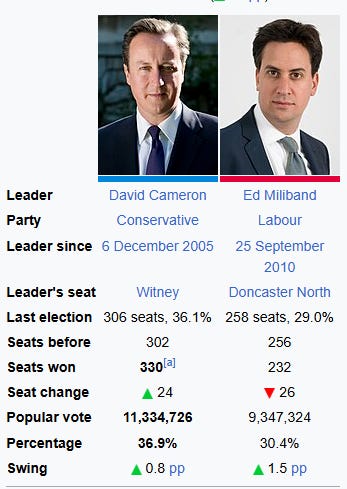
Ed Miliband
Failed to stop Cameron, failed to stop Brexit. Put this down on Polymarket if he becomes Prime Minister: failed to stop Farage, failed to stop the destruction of the United Kingdom.
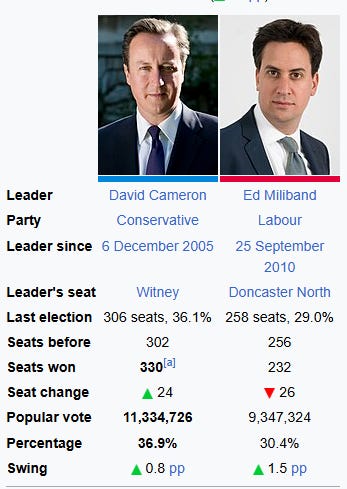
We failed once. We must fail again. Angela Rayner
Unlike Starmer’s appointment of Mandelson, there is no multi-dimensional, charitable read of her decision to not pay taxes on a second home. There is only bad advice, and her decision to follow said bad advice. While she has been cleared of wrongdoing, her poor judgment in such an obvious manner is permanently disqualifying.
Wes Streeting
Imagine Keir Starmer. Now make him gay, and make him the prime mover behind the appointment of Peter Mandelson. That’s Wes Streeting in a nutshell, who policy-wise is as Starmerite as they come. Yet, Streeting is the obvious patsy for the Mandelson debacle; more than Starmer or anyone else, he alone bears the weight of that sin. Beyond that, there is little to say about Streeting for PM other than it would be good for Wes Streeting. His personal ambitions aside, there is little reason for either Labour or Britain to be forced to swallow Streeting down their respective throats.
Andy Burnham
He is the supposed Leftist darling, the Prince-That-Was-Promised, the sole possible inheritor of the Corbynite legacy within Labour now that the Green Party have established themselves. Of course, he has a long way to become PM. First, he needs to become a member of Parliament in a by-election, far from guaranteed. Then, he needs to convince the Labour Party, elected and led by Keir Starmer, that he is a suitable replacement. Assuming he does all that, he then has to govern. And here the material conditions rear their ugly heads: replacing a Prime Minister barely two years into their five year term is a desperate gamble made only by governments and parties in collapse, especially if the appointed Prime Minister has a totally different governing philosophy than the previously-elected Prime Minister, which would be the case with Burnham and Starmer. The financial markets already dipped into a tailspin on the mere announcement that Burnham would be running for office. Imagine if he won his seat. Imagine if he became Prime Minister. A Truss-level economic meltdown is practically guaranteed. The damned irony is that not only would this make the necessary investments Britain needs to make all the more expensive, but it would also make Burnham’s agenda of expanding benefits all the harder to achieve. So yes, Labour can appoint Burnham, but they’ll be dooming the British public to fewer services, less money, and of course, to Nigel Farage’s government in 2029.
Keir Starmer
There is no alternative. Truly. Starmer today is Prime Minister, and assuming Labour continues to support him in Parliament, he will continue to be Prime Minister until 2029. Labour presently has a majority of 403 members in the Commons out of the 650 who sit in the Chamber. That is a majority large enough to pass whatever legislation the country needs. This majority was voted in by the British voting public as recent as 2024, chosen and led by Keir Starmer to that momentous victory. Many have challenged Starmer in recent days to come up with a strategy, with a plan to reverse Labour’s decline. His response to his naysayers was simple enough: “Trust me.”
Is it that simple? Can we really just ‘trust’ Keir Starmer to somehow turn around Labour’s electoral performance? But is there really any alternative? Labour’s recent decline in fortunes can be blamed squarely on Trump’s reelection, both his trade wars and his wars around the world, most recently in Iran. That’s not something Starmer or any politician can control. And, it’s not something any of his Labour or other-party competitors would cope with any better.
What does trust in Starmer give? Time, mostly. Time for the British political economy to kick into gear and begin to deliver on those investments made early in Labour’s term. Time for Trump’s wars to end, time even for Trump himself to leave office and (hopefully) be replaced by saner actors. Today, the Iran War and Donald Trump dominate headlines. By 2029, both will no longer be factors, replaced instead by steady economic growth delivered by a Labour administration focused on continued long-term growth. By 2029, voters will be thanking themselves silly for not going along with any of Starmer’s possible replacements, and Starmer and Labour will be cruising to their respective reelections.
Leftists, more than others, are supposed to understand the constraints of material conditions when deciding state policy. Did Marx not say, after all, that men make their own history, but not of their own choosing? If we could choose our own history, we would all choose immediate communism—that is, a stateless, classless society. Yet our desire for something does not make it so, and so our task today is the same as the task of our ancestors, to continue to select and elect the necessary precursors who can build the stable foundations for the future communist society. That in turn requires the selection of leaders who will pursue policies that will lead to a permanent surplus of industrial goods and raw energy, that, when combined, will have enough power to reshape not just our material conditions but the very geography of the physical world. Judged by the alternatives therefore, the present course must be continued.
The choice for Britain has always been between barbarism and socialism, same today as ever. Shall the Labour Party continue to invest in a world with better material conditions (leading to a classless and stateless society), or shall the barbarities of her opponents make tyranny and collapse the permanent order of the day?
We say: four more years, ten more years, ten thousand-thousand more years of Starmer, it doesn’t matter. To us, we do the job until the job is done. It’s as simple as.