

As of this writing, the Federal government is still technically shut down, and has been for 43 days since October 1st, the longest shutdown in history. It will likely remain so for a few more days yet, as although the political drama is over, the vulgarious inanity of jumping through Congressional rules and norms mandate several yet more days of having an unfunded Federal government. Many desperate questions abounded and still ricochet throughout America’s body politic to this day. What was the government shutdown about? Why did the government shutdown? What the hell is even a government shutdown?
That last question is the most helpful, for it can accurately set the stakes of the political fight. First, let’s define how the government is funded. Per a 1977 law, Congress must pass some legislation (either a continuing resolution or twelve individual spending bills; do not worry about this as this will not be on the test) every twelve months, with the legislation due by 11:59 pm on September 30 every year, to fund the government for the next year. To be clear: this does not invent money out of thin air or collect it by other means. The money already exists in the Treasury, via government taxes, bonds, and other funding measures. All this legislation does is authorize the Treasury to withdraw from its own accounts to pay for programs Congress has enacted in other legislation.
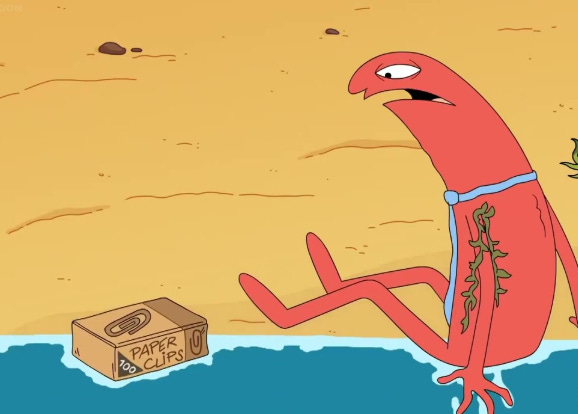
To simplify this, let’s assume Congress passed a bill mandating that every paper clip be manufactured locally and with depleted uranium. In that bill, they created an Office of Humane Radiological Poisoning (OHRP), with a set annual budget of 5 million dollars to ensure American paper clips include the right amount of depleted uranium. Assume that bill passed in 1991. Every year since 1991, Congress needs to continue to authorize the Treasury to withdraw from its accounts $5 million (or more, or less) and give it to the OHRP. If the OHRP is not funded from the Treasury, and it does not have any other way to fund itself (such as fees), then the work of the OHRP must stop, its employees cannot legally work (per another Federal law), private donations cannot fund it (another law), and even though Congress passed a law saying paper clips must be made with depleted uranium, the lack of an enforcement agency means that American paper clips could start to be manufactured using less radiologically damaging materials (egads!).
Everything above is true of course, except for Social Security, Medicare, the VA, air travel, emergency services, mail, the military, and law enforcement. See, the 1977 law mandating that Congress go through this really complex process of passing a law to do something and then having to pass another set of laws annually to authorize the Treasury to continue doing what Congress has already said it wants done is just a law. It’s not in the Constitution; Congress could and indeed did carve out plenty of exceptions, including one for its own members (though that is more due to the zombie 27th amendment passing after 200 years). Regardless, it’s important to note that when the government “shuts down”, it doesn’t mean that the government has ceased to exist. Quite the opposite; what shuts down is everything deemed ‘non-essential’. While this varies from department to department and agency to agency, it broadly means:
A stoppage of regulatory enforcement and rulemaking.
A stoppage of janitorial, cafeteria, and other service worker staff.
A temporary end to guided tours of Federal facilities, and the limiting of access to some parks.
Significant delays for passports, flights, student aid, cuts to some benefits programs (again, not Medicare or Social Security).
Again, this varies, but at a high level, a Federal government shutdown does not affect many people. To the extent people have felt or even known there was a shutdown was limited to those who work in the Federal government and their friends, and those who interact with the government for leisure or work. It all adds up to a fraction of a percentage point, not that the shutdown did not hurt real people. It absolutely did.
An estimated total of 900,000 people were furloughed, with an additional 700,000 forced to work without pay (with back pay now guaranteed). Every week the government is shutdown eliminates 0.1% off of our GDP, which ripples throughout the entire economy in ways many people cannot even begin to truly comprehend. The pain is real, the pain is felt, even if the day-to-day effect is miniscule.
Yet despite that, there is no ironclad rule that says that the government needs to be funded. As mentioned, essential services remain open, and if they were ever truly threatened (say, a military mutiny over going without pay for months on end), then there would be unanimous bipartisan consensus to pass at least a partial funding bill. Not that this is in any way desirable, and indeed that would be extremely unlikely, but it is important to put things in perspective.
America is also not unique amongst Western democracies in having government lapses while essential services remain functional. Belgium didn’t have a government for 652 days from 2018-2020. Italy had a smaller scale lapse in 2013 for 62 days. Spain, the Netherlands, Germany all had their own fallen governments in the last 15 years. None of those can be described as failed states; travel there yourself right now and bear witness to how the sun still rises and sets in relatively stable peaceful bliss (compared to less blissful parts of the world right now), same as it does here.
This is not to advocate for a 652 day shutdown, of course, rather to make the point that the record of 43 going on 44 days is not something that is truly groundbreaking in world historical terms; America could likely survive (not that we would want to!) a 1000 day shutdown.
Why and Why Now
In 2010, President Obama and his Congress passed the Affordable Care Act. Part of this bill established health insurance subsidies; basically, the Federal government created a marketplace where individuals and families could purchase insurance from private insurers, with part of the cost being subsidized directly out of the Treasury. 11 years of skyrocketing inflation and healthcare costs due to an ever aging population later, Biden passed the American Rescue Plan Act of 2021 which increased subsidies, and then passed the Inflation Reduction Act of 2022 (perhaps inaptly named in hindsight), which extended those subsidies until October 1, 2025.
Hence, the fight. Or, at least, that’s what the message de jour became, the message that all the Democrats publicly agreed upon was the fight while in private the fight was about anything but. Before the shutdown even began, there was widespread disagreement over whether to even have a shutdown. In March of this year, the leader of the Democrats in the Senate, Chuck Schumer, voted alongside a handful of other Democrats to keep the government functional. That could’ve had a repeat occurrence with the October shutdown deadline, had Democrats and their base not been absolutely fired up in resistance against Trump. The massive ongoing protests to Trump’s authoritarian overreaches, from Gaza to the boats in the Caribbean to the ICE raids on our streets are just one example of how pissed the Democrats are. Their anger was further affirmed on the first Tuesday of November, when Democrats walloped Republicans in states from Virginia to Georgia, with other polling showing blaring alarm signals for down-ballot Republicans in 2026 and 2028.
Yet that’s not why Senate Democrats shut the government down (again, at least, according to what they said in public). According to them, it was about none of that, and instead all about the ACA enhanced subsidies. It’s important also to keep in mind that with Trump in control of every branch of government, except a filibuster-proof majority in the Senate, there was very little Democrats could do. And, if push came to shove, Trump would very likely shove, either ordering the Treasury to illegally make appropriations outright or forcing Republicans to override the filibuster.
As political messaging goes, the subsidy fight was perhaps a poor choice. Yes, it affected millions of Americans, but not the 150 million who receive employer-sponsored insurance or the vast remainder who receive government sponsored child or elder care. In sum, it amounts to 22 million people, 3/4 of whom live in Trump-voting states in 2024. Before one gets a potential lightbulb flicker of the political opportunities of this, there is no way to tell if those people are all Republicans (they could already be Democrats who happen to live in Republican states; there are tens of millions of those), or if they are Republicans that they will either blame the Republicans or even care that the Republicans did it.
While those 22 million do need the subsidies extended and it is something Democrats should morally support, it by far is the least of everyone’s concerns at the moment. The President is ruling like an authoritarian tyrant, playing the exact same playbook that other Western authoritarian tyrants, from Orbán in Hungary to Yeltsin and Putin in Russia, have played. Let’s run through the quick checklist.
Are opposition political figures being arrested, indicted, harassed by government officials? YES: see Kat Abughazaleh, Brad Lander, Ilhan Omar, et al and etc.
Are neutral institutions like the media and universities being coerced into adopting government official policy? YES: see CBC, Columbia University, et al and etc.
Is the military being co-opted, purged of potentially politically disloyal figures? YES: see Hegeth’s overhauls of the military.
Are people being snatched off the streets and being sent to concentration camps? YES: see ICE actions, CECOT, and the utilization of Guantanamo Bay.
Is freedom of speech being curtailed? YES: see government and private threats to sue, or to otherwise take negative coercive action.
Is Congress’ funding authorities being overridden by executive fiat? YES: see Trump not funding USAID and other programs.
Is the President enriching himself and his cronies? YES. NO SHIT.
And perhaps the most important as it is the most potentially dangerous: is the government unilaterally executing masses of people without trial or justification? YES: see US private contractors in Gaza, US military actions in the Caribbean.
In other words, what the Trump administration is doing on a daily basis affects every single American every single day, and it is precisely what individuals like Putin used to transform their states into brutal authoritarian dictatorships. While it is true that most people have yet to personally witness Trumpist brutality, it’s still a massive, epochal event that has reverberated across every stratum of America. Even if people don’t consciously don’t want to admit it yet, we all instinctively realize that the government has masked paramilitary goons snatching people off the street to be sent to concentration camps where they’ll be tortured, raped, and possibly even killed.
Now, to some, that’s a positive, as long as it doesn’t happen to them. To many, it’s a neutral, like climate change. Yes, the weight of our sins will consume us all but it might not even get you in your lifetime seems to be the reaction of many thus far. Resignation to a grim reality is a well-founded concept in many authoritarian societies, after all. Why resist, even in bad conditions, if the state can deploy a scope of awesome powers to crush a very insignificant you?
Yet there is still a Congress, there is still an opposition party. The opposition party could and indeed did choose to shut the government down, even if the immediate outcome of that hurt mostly Democratic-aligned voters in Northern Virginia. Yet, they did not make the fight about the fundamental Constitutional rights both the people and Congress possessed Trump was violating, but rather whether or not to extend the ACA’s enhanced subsidies. The fight could’ve been about that, of course, but only in a scenario where our fundamental rights took front and center.
Instead, Schumer and the Democrats in the Senate talked as if and only if the ACA enhanced subsidies mattered. In that telling, reopening the government now made sense. The Democrats won the messaging battle, to the extent that things like that matter (they do, but not directly in ways one might think). Now in 2026, one thing Democrats can run on, for those 22 million rely on ACA subsidies, is in extending those subsidies. As Trump was willing to keep the shutdown going on indefinitely, or to end it by ending the filibuster, there was indeed little point in keeping the hurt ongoing, especially since Democrats were the frontline victims of the shutdown. They made their point and won the battle.
Yet, to many, including many Democratic Senators, what a handful of Democrats did in reopening the government was nothing less than a caustic betrayal of the party and the American people. Their offense is well-justified, as Schumer himself is not well-conditioned in articulating a vision of opposition against Trump. No, the shutdown was not really about the ACA subsidies. But neither was it about Trump’s authoritarianism. Instead, the shutdown was a fight to have a fight to determine how we want to resist Trump.
What It’s Really About: Establishmentarianism versus Disestablishmentarianism
Trump is an authoritarian-in-becoming. This is fact, not opinion (see above and all around you; pick up a goddamned newspaper). His power is not individual; it is based in the occultic loyalty that the Republican Party affords to him on a daily basis. Democrats and those aligned with them are marked as enemies of the Republican Party, and thereby of Trump, and thereby, of the American Fascist State. Every Democrat wears that opposition to Trump and his fascism like a badge of pride, but how they wear it differs.
If there is near-unanimous agreement that Trump is an evil authoritarian amongst Democrats, then the source of the disagreement is in the degree to which Trump should be opposed. This, far more than the ACA subsidies or what Trump is actually doing is what the shutdown was about. These are represented by two factions in the Democratic Party, the establishmentarians and the disestablishmentarians.
To put it simply, what it boils down to is a question of the level of resistance one is capable of personally stomaching. To some, the former, resisting Trump must not come at the compromise of fundamental American institutions and norms. In real terms, this means that yes we must oppose Trump, but not if it means enforcement agencies like the EPA get shuttered or if air travel becomes inconvenient. To a very small minority, it further means that the Senate’s filibuster must be preserved even at the cost of America’s democracy (even though the absence of a filibuster would force Senate Republicans in Harris and near-Harris states to take wildly unpopular votes, from the perspective of either their base or the general electorate).
To the other, the latter, resistance to Trump must be a suicidal arsonist pact. If Trump is willing to take a hatchet to all laws and norms, chopping at the bits of what makes America work on a daily basis, Democrats must be as willing to swing that ax, in other words. Of the 47 Senate Democrats, based on the vote to open the government, 8 thought that that was not the fight worth having—yet.
As clowned on as Democrats are, they are not in an enviable position. Lacking a singular, unifying leader, the Party is facing potential annihilation, and it knows it, from the leadership to the base. Doing nothing risks damnation, doing something risks damnation; behind every door is a perilous abyss. Assume the government had remained shut down until after the midterms, or until after Trump was removed from office in January of 2029, a not-too unlikely outcome. The damage of an atrophied regulatory state would take years to unravel. However the Senate functioned today would be vastly different then. And it might force Trump to take ever more drastic action. That was the argument made in March and the one made behind closed doors in October and November, and ultimately, enough Democrats were convinced to kick this can down the road for at least one more time.
This is not to defend their inability to govern and their predisposition to hate life and themselves. A vast majority of all Democrats, elected or not, think fighting Trump, the consummate suicide bomber of executive norms, require as much gumption on our side. Yet for a Party that has stood since the time of Grover Cleveland in the 1890s to more or less defending American institutions, for better and worse, asking them to turn on a dime and be willing to torch those same institutions in a sudden (albeit long-building) epochal political struggle to the death with Trump and the Republicans might be asking a bit much. The Republicans had the singular Trump who could barrel through norms, using powers granted to him by different Congresses, pliant courts, or the Constitution itself, to establish new realities. Democrats have Schumer and Jeffries, the former of whom loves the Senate establishment so much he will likely die and be buried in those halls if he had a choice.
Yet, you can only keep an animal’s leg locked in a trap for so long before it begins to gnaw its own leg off to escape. Even people like Schumer, who love American institutions more than they love American democracy, are beginning to realize that without fundamental rights, nothing else really matters. Let’s turn back to the 8 who voted in favor of reopening the government. What they said matters less than who they were, and that alone tells us where the Party is at.
Senator Durbin of Illinois
Senator Kaine of Virginia
Senator Shaheen of New Hampshire
Senator Hassan of New Hampshire
Senator King of Maine
Senator Rosen of Nevada
Senator Masto of Nevada
Senator Fetterman of Pennsylvania
Of the above eight, only Durbin is in a safe, blue senate seat. While Kaine’s seat is also relatively safe, he is unique in that again, he represents many voters who are employed in the Federal government. Durbin’s vote likely came out of some arcane Senate procedural vote, or some backroom deal to make him the main bad guy of the week instead of Schumer (he still got blamed regardless!). As for the rest, they still have to win in purple-ish red states, which forms part of the reason why they reopened the government. Keeping the government closed did not benefit them, nor did they necessarily want to escalate the contradictions with Trump.
The problem is, we don’t really know how many are truly willing to escalate the contradictions. While we know 8 Democrats voted to reopen the government, we don’t know how many other Senate Democrats, who care far more about institutions, pleaded with those 8 to reopen the government for their sakes. Are there truly 39 Senate Democrats ready, willing, and able, to embrace Trump and fling themselves off both of the cliff into the endless abyss of unknowable political outcomes? Certainly some Democrats, like Sanders or Ossoff, think yes, the time has come for a constitutional showdown with Trump, no bars held, winner takes all. Yet to others, whose life consists of reading committee briefing papers, calling donors, attending fundraising events, and behind endless closed doors in the endless grind of Congress, you might as well be offering a one-way ticket to Mars. There might not be 30 Democrats voting yes for that, there might not even be 20.
Yet, there are more than there were in January when Trump took office, or in March, the last time we had a funding fight. Every day Trump of his own accord heightens the contradictions on his side, is a day he pushes Democrats closer to embracing that tactic themselves. And, the recent election has further shown that opposition to Trump is an electoral winner.
What these few remaining establishment Democrats have is a hope against hope, absent of all evidence, that Trump will today, tomorrow, soon, say this far and no further when it comes to authoritarianism. And he gives plenty of signals daily that even he has limits, which continues to pump fragile hope into this false belief. In many ways, it’s like the liberal zionist’s hope (and indeed many willing to hold onto the establishment are zionists themselves) that despite hearing Israeli government officials say that they would starve every man, woman, and child in Gaza, that they would exterminate them all like Biblical Israelites exterminated the people of Amalek, that despite ample evidence showing that indeed that is exactly what Israeli policy is, that the jury is still out if Israel has committed a genocide.
How many times did after all Biden receive reassurances from Netanyahu, how many times were red lines drawn in the sand, only for the reassurances to be forgotten and forgiven the next day, with red lines smeared by treaded Merkava tank tracks? Too many. Yet the next day, more reassurances, more red lines. This should not come as a surprise; Netanyahu himself is practically a mentee of Trumpism, following him around like a lovesick puppy, begging for his constant approval. No wonder that Netanyahu and Trump alike are able to play Democrats to a fiddle. For just as Netanyahu has come up with a way to ostensibly get away with genocide, so too has Trump come up with a way to get away with authoritarianism.
Despite all that, some hope does remain. It is true that fewer and fewer Democrats are willing to go along with Netanyahu and Trump alike. If Democrats were to have a single, unified leader, they might even get to the 40 votes they needed to keep the government shut down indefinitely sooner, to otherwise take the battle to the next step up the escalation ladder. The Democrats have been patient to a major fault but even their patience will run out. And even though some like Fetterman will never stop compromising with fascism, of the 47 Senate Democrats, there are between 42-45 possible ‘nays’ in keeping the government shut down; all Democrats need is 40 votes come January or at some point further down the road (hopefully sooner!).
For after all was said and done, all Congress did was kick the can down the road for two months. In two months, the government will shut down again, absent Congressional action. First, Democrats should have a plan for what to get from the shutdown. It’s very likely Trump will agree to nothing, so demand everything: an end to his blatantly unconstitutional actions. One could go even further and demand Trump use the 25th amendment to temporarily step down to face justice in the various paused criminal proceedings pending against him. The ask doesn’t really matter, what matters is how Trump will react, and thusly how Democrats will react:
The Messaging Jubilee: If Trump forces the Senate GOP to override the filibuster, take glee in the various constituent votes those Senators will have to take as every House messaging bill suddenly becomes passable in the Senate. Regardless of the harm those bills could take, it will make taking back control of the House and Senate, and the Presidency in 2029, much more likely, at which point, we could undo all the harm done and better improve lives (with the filibuster already being de facto abolished).
Let’s Play A Game Of Russian Roulette: If Trump orders the Treasury to illegally appropriate funds, Democratic states should seriously consider nullifying Federal taxation laws within their borders, immunizing non-payment of Federal taxes, and placing Federal agents attempting to enforce tax collection in their states under arrest. While this may sound extreme, if Congress is not a legal institution anymore, no state is thereby bound to respect or obey the federal government. As Trump would be abolishing Congress’ powers through this act, the states would have no choice but to nullify the federal government’s funding powers.
We Win, You Lose: If Trump does nothing, and the government stays shut down, yes, people will be hurt and the authoritarianism might continue, but if anyone will be hurt politically, it will be Republicans (as polling and the recent election affirms). Of course, this means leaving nearly 2 million American federal employees, many of them Democrats, in the helpless lurch of the furlough or unpaid work, to say nothing of the hurt felt by many others. Yet: by making the fight about authoritarianism, about Trump’s power grabs, Democrats will have unified on a strategy and policy of abject, total resistance to Trumpism. If Trump wants to lead and have an authoritarian government, Democrats will play no part of it. We will not confirm his appointees, we will not do unanimous consent agreements in the Senate. Everything that works today in the government will turn to ash in Trump’s mouth as Democrats halt the grinding gears of everything down, with a believable promise that in 2026 and in 2028 that Democrats will return to power and make everything better. Indeed, that’s how many other parties in democratic states react when they are in opposition. The Tories in the UK don’t really spend much time considering how they can help Keir Starmer pass his agenda!
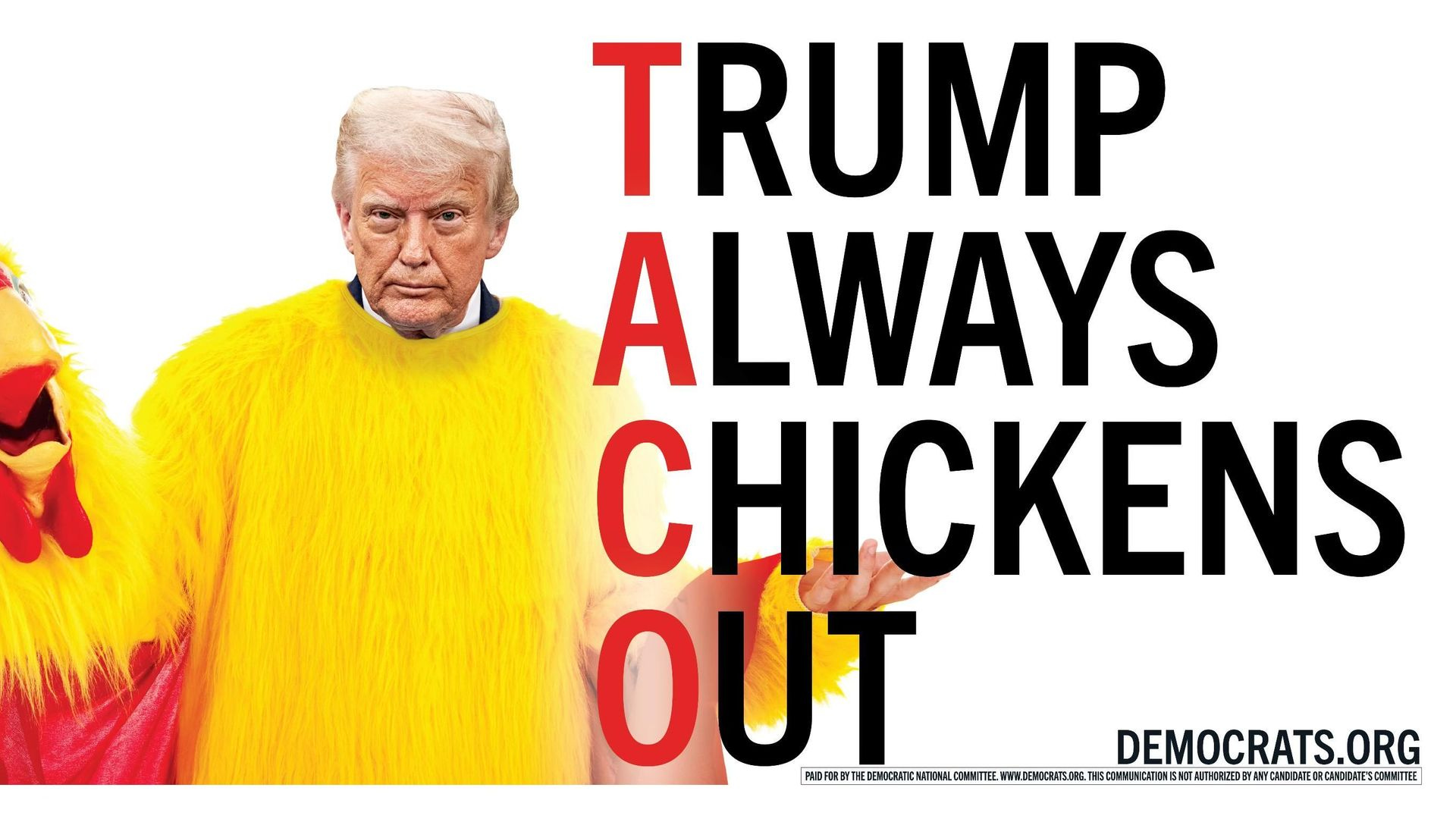
And so on. Each reaction by the Democrats will result in a counterreaction by Trump, and so on. Eventually though, one side will blink. Although we could continue each thought experiment into civil strife if not outright war, more often than not, people blink. Trump especially. In political showdowns like these, always bet on the side that has more popular, media, and military support. That is the Democrats and has been since day 1 of the crisis. And, lest we all forget, Donald Trump is literally a TACO.
So it’s very likely that if the Democrats chose to have a fight about Trump’s authoritarianism, if they were willing to stare down the barrel of authoritarianism like their moral heroes Mandela and King Jr alike, then they would very likely win. If not immediately (we should not discount the insanely ludicrous possibility that Trump might take the easy way out, after all), then surely we will set ourselves up for a better chance at victory in 2026 and in 2028.
And, more important than the elections is making the argument about the elections. How is American democracy retained? How is autocracy fought against? It isn’t just once every four or two years at the ballot box or on the street corner: it is every day, every waking moment that you are free and breathe free air on free soil. It is in the ritualistic prayers we whisper to ourselves, about the next elections, about how important democracy is, about how we need to fight against Trump. In other words, by making the fight about democracy, we better protect democracy.
And with the hour so late, we might not have a better opportunity to protect American democracy. We can only pray that Democrats admit that the hour is indeed late, for all our sakes.