

Two familiar shouts echo daily across the country in local planning commission and city council meetings.
“Yes, in my backyard!”
“No, not in my backyard!”
One can even imagine the stereotypical representation of both shouts. The Yes crowd is often stereotyped as near-unanimously younger, often whiter, higher paid professionals, who demand first and foremost an increase in housing supply to reduce home-buying costs, so that they may enter into the very lucrative real estate market for reasons of personal profit. The No crowd, comprising an older, still white, yet even more cantankerous coalition, demands the opposite for the inverse reason that higher home-buying costs are in their direct financial interests. As an asset, there are few more profitable ventures than real estate, especially the type of real estate that the No crowd tends to occupy: high-cost, small square foot, suburban properties. After the 2008 Great Recession, housing prices stagnated to the great consternation of the No crowd (and to the political benefit of the Tea Party coalition), until housing prices finally rebounded and then skyrocketed in the middle of the last decade.
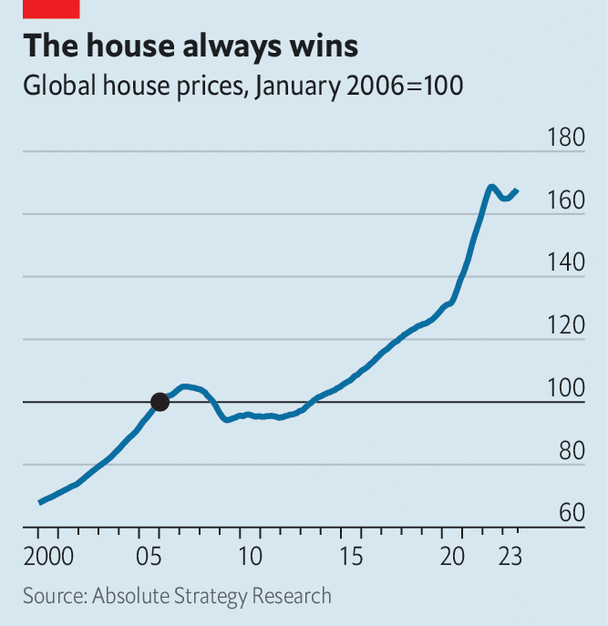
Regardless of what the No crowd says about the historic or cultural value of ancient, unkempt buildings, this is the truth of the matter. Opposition to new housing is not of any mere aesthetic reason, as they often state, but out of a plain financial one. To the extent that aesthetics are in the equation at all is because certain aesthetical and architectural decisions inflate home prices while others deflate them. Access to amenities, to public services such as schools, fire departments, police departments, well-maintained public roads, and so on likewise deflate or inflate prices depending on quality and availability of those services.
And just as NIMBYs want higher home prices (to sell or to rent out), YIMBYs want housing prices to be lower so that they too can enjoy this lucrative market. After all, the Boomers, the generation that benefited the most from low house prices: they bought low, so to speak, and now they sell high. The YIMBYs see this as patently unfair, and desire for themselves the same arrangement with depressed housing prices now so that they too may enjoy the fruits of a rising market. To a NIMBY, more housing means less profits; to them, you might as well be reaching into their retirement and stealing half their wealth.
This of course means that if housing prices were ever to decrease, today’s YIMBYs would become tomorrow’s NIMBYs. Don’t get it mistaken: while many YIMBYs preach a good game about needing to provide housing for those in lower income brackets, the decrease in housing costs is totally incidental to their main policy goal, which is to make a profitable investment in real estate. If they had their way, there would indeed be far more housing built. Housing prices would go down. But fast forward 30 years and those same people will be holding up placards at city council meetings decrying the oppression of the newest low-rise apartment complex, as their parents did.
Materialism forms the boundary of psychological and sociological association. Very few, only the insane or the holy (and sometimes both), can argue for their own personal immiseration for the benefit of the masses. Thus will it be the case for today’s YIMBYs. Imagine if five million new housing units were constructed, with home prices crashing back down to $100,000 or lower per unit, even in high density areas like San Francisco. After the orgy of excitement abates, and all those housing units are filled by the Millennials and Zoomers, will those same Millennials and Zoomers in thirty years support the creation of an additional five million housing units for the new generations Alpha and Beta, at the cost of losing potentially a million dollars or more (in today’s money) in their investment from thirty years prior? Of course not. If you put it on a ballot, these now elderly Millennials and Zoomers will react like Boomers and riot, enforcing by force if need be the present status quo.
Not that NIMBYs hold some higher virtue, quite the opposite. They are, to a person, all liars and thieves of the public coin purse. Every time they talk about ‘preserving the culture of a community’, or phrase their opposition to new construction using some other doggerel, it is almost always from a place of vain greed. “Yes, yes,” they will say, “it is terrible that people freeze to death on the street,” leaving unsaid, “if we built a shelter for them, the profitability of my investment will go down 14.5% year-over-year.” American housing policy makes us all, in other words, psychopaths, for while most of us are born YIMBYs, we will all die NIMBYs.
Left unsaid, of course, are the tens of millions of Americans who are not homeowners and will never become homeowners. Since 1960, we’ve never had more than 70% homeownership; our current numbers hover around 64%-66%.
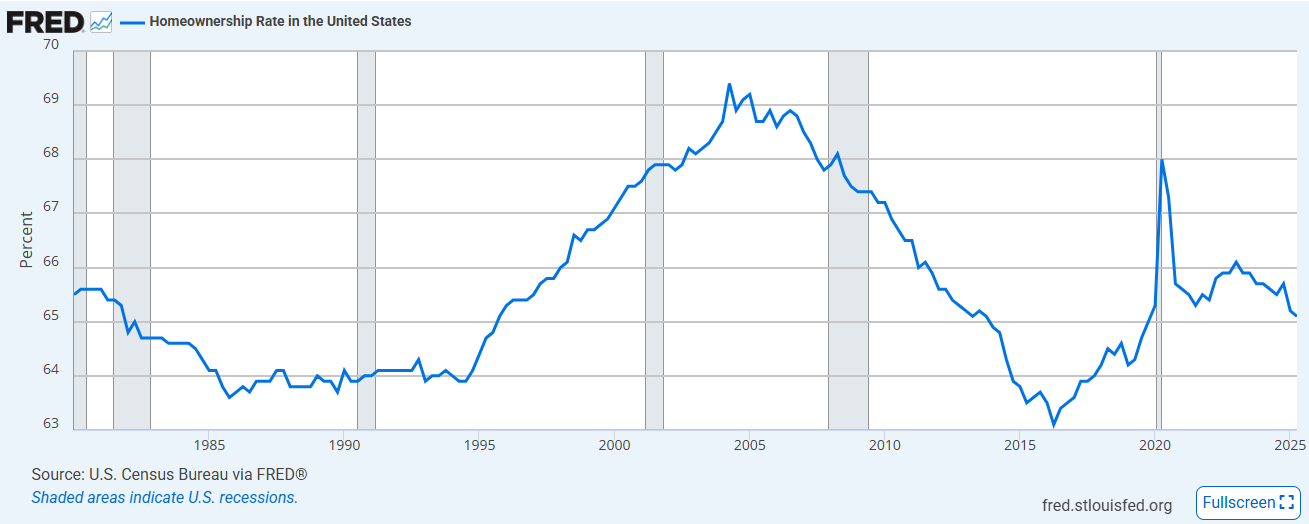
These numbers look far worse when you break them down by race, of course (because this is still America we’re talking about):
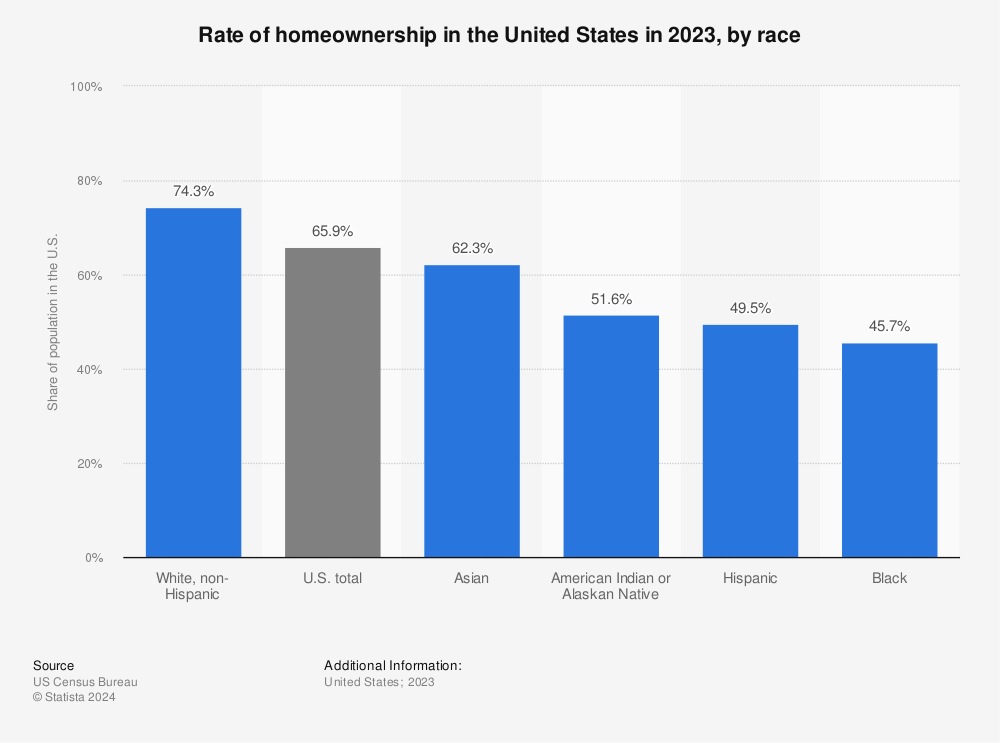
It is near-pointless to make a moralistic argument against the housing market. Yes, it prices people out, yes, it makes the poor nonwhites poorer and the rich whites richer, yes it is inherently unequal. But this is America; to many, this is a necessary bargain to have a nest egg of generational wealth, a property they can pass on to their descendants or otherwise sell at a massive gain for themselves. These people do consider themselves moral; they would give a dollar bill to a homeless man one day yet demand the local shelter be shut the next. Their class interest as a property-owning class hones their policies, in other words. We all know the social contract after all: this is a dog-eat-dog society. Some people just have to starve to death, to be bombed to ashes by our gaudy death-machines, in order for us to live in comfortable mansions of abundance.
This unequal distribution is inherently morally repugnant; to force people to live on the streets for your own personal profit is slaveowner mentality, but just like the slaveowners of yore, arguments based on morality turn few heads, especially if they feel absolved by giving to charity, or as was in the case of pre Civil War America, emancipating their slaves. Instead of focusing on some higher morality therefore, let’s focus in on the negative externalities of a market configured in such a way, for there are many, and they make the whole venture impossible to sustain, no matter how much these -IMBYs would desire otherwise.
